| Category | 1950s/60s | 1970s | 1980s | 1990s | Since 2008 |
|---|---|---|---|---|---|
| Narrative | Reactive growth, modernization, and integration into the world economy | Fight against extreme poverty and inequality | Lost decade: collapse of commodity prices; increase in debt | Sustainable development; decade of hope | Polycrisis |
| Basic idea | Catch-up development through industrialization and large-scale projects | Satisfaction of basic needs, growth, and effective distribution | Overcoming the debt crisis through structural adjustment measures, reduction of state services | Global sustainable environmental policy, economic growth, peacekeeping, continuing basic needs strategy, participation | Bringing together various crisis phenomena (financial crisis, climate change, biodiversity crisis, etc.) |
| Theories | Modernization theories (stage theories) | Dependency theories versus modernization theories | Market liberalism and neoliberalism | Theories of sustainable development, Neoclassical growth theory, Postcolonial theories, Capability approach, Post-development theories | Additional resilience theories, post-growth theories |
| Goals | Geopolitical classification of the “Third World”; containment of communism, modernization of agriculture, rapid industrialization and technological progress, opening up of new markets | Aid for self-help, appropriate technologies, rural development, promotion of women | Increase in exports, balanced state budgets | Paradigm shift in development aid towards development cooperation, environmental and social compatibility of development, ensuring access to resources and infrastructure for all | |
| Consequences | Economic dependence and indebtedness increase, income disparities widen, poverty rises, ecological damage due to overuse and inappropriate technologies, undemocratic regimes are supported for geopolitical reasons | Selective progress in education and health, problems of debt and environmental damage | Living standards of the poorest population groups deteriorate severely, environmental exploitation, debt spiral, increase of dependency of the Global South on Global North countries | Focus shifts from purely economic development to human development; industrialized countries are obliged to implement sustainable development; emergence of a global development partnership |
1 Understandings and Concepts of Sustainability
Where do the concept, mission statement, and guiding principles of sustainable development come from? How did the concept emerge, how did it evolve – and why? The following explanations provide an overview of the history of sustainability, the political background, and key conferences and documents. In short, what has made sustainability what it is today. It’s about seeing the big picture. Because only those who know the past can assess the future.
Sustainability has been the buzzword of recent years, from science to politics and business to the media. Initially, the term has a positive connotation because it is associated with the long term, the durable, and many things are “sustainable” today: coffee, corporate philosophy, even tuna pizzas. These are the demands of a consumer society with a considerable – but inconsiderate – appetite for abundance. First thing in the morning, the shampoo removes our dandruff “sustainably”. Then we drive to work at a company that prides itself on its “sustainable corporate philosophy”, and over lunch we discuss sustainable investments. At home, we stick a tuna pizza in the oven – sustainably sourced and produced, of course, as it says on the box.
Today, the term sustainability is everywhere: it’s used in connection with energy, mobility, building renovation, nutrition, population development, corporate environmental management, and climate protection. It’s also used in art, culture, design, and advertising.
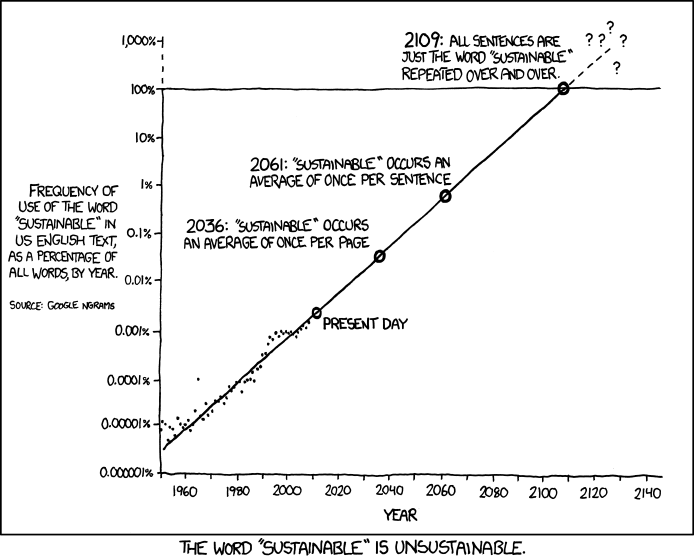
Is the term sustainability so overused as to slowly become meaningless? Even if this is the case, we shouldn’t abandon key terms like this lightly. For example, it’s still important for companies to have a sustainability strategy, even if many such strategies are inadequate or amount to greenwashing. We need to clarify the meaning of “sustainability” and hold those who use it to account. And we should base our interpretation on science and historical developments. The historical precursors to the sustainability model explained in this textbook are:
Start of the discussion about sustainability: Carlowitz’s forest management principle of 1713
Clash of economy and ecology First and second UN Development Decades (1960s and 1970s)
The Limits to Growth (1972)
Brundtland Report (1987)
Rio Earth Summit 1992 Agenda 21 UN Millennium Development Goals (MDGs) (2000–2015)
2030 Agenda with the Sustainable Development Goals (SDGs) (2015–2030)
1.1 A normative concept
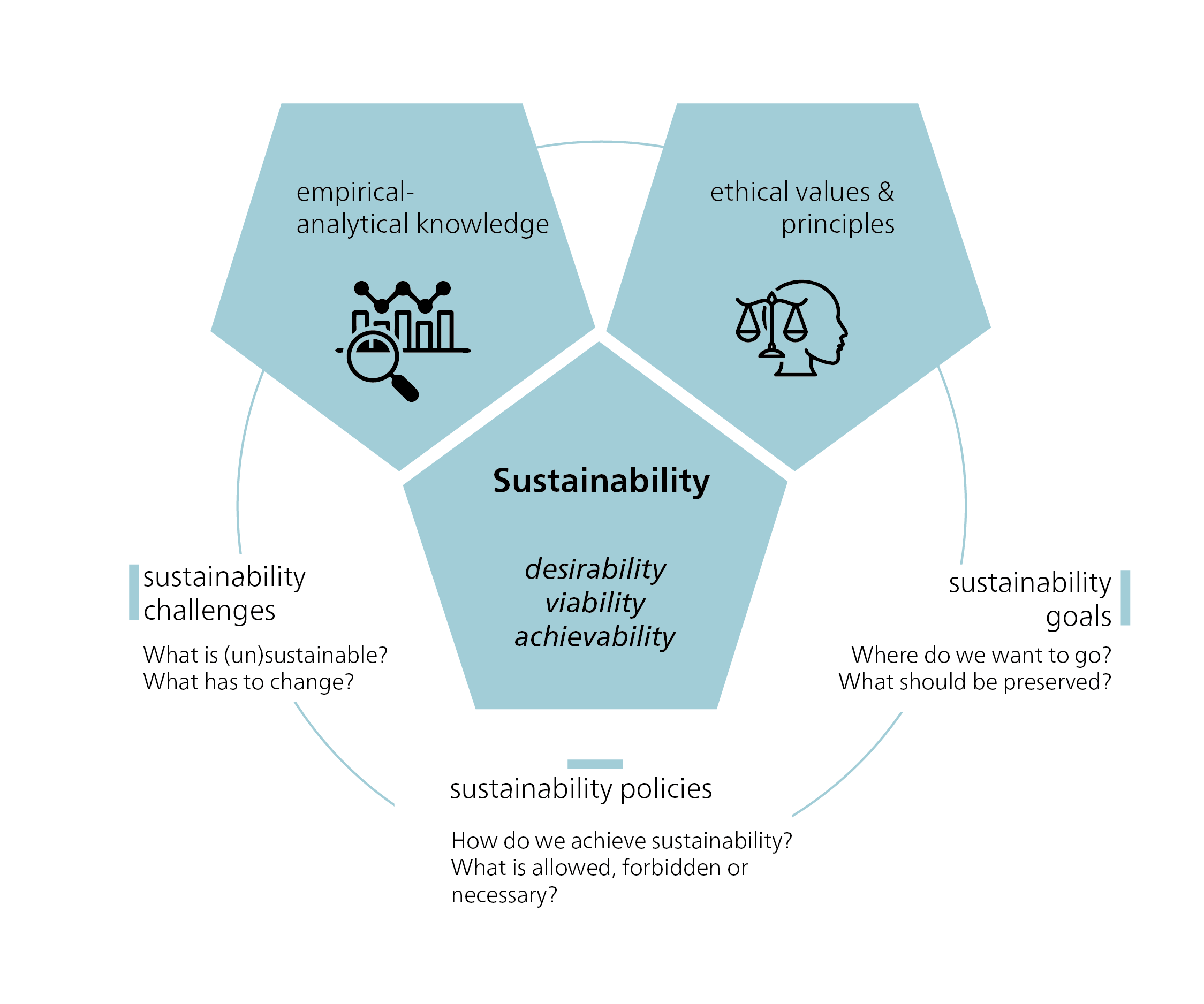
To achieve sustainability, we need sustainable development: a strategic process that requires changes in our socio-ecological systems and institutions. “Development” implies controlled improvement, and the ethical question of what exactly “better” means is key. The use of the term “development” has been criticized by some (e.g. Lang and Mokrani 2013; Kothari et al. 2019), as it is often equated with unbridled growth. The unbridled growth of our “ecological footprint” – the proportion of the biosphere used for human production, consumption, and waste – is unsustainable in the long term. Nonetheless, there are different interpretations of development, ranging from economic growth to improving quality of life. Sustainable development therefore remains a stimulating and controversial concept. Sustainability and sustainable development play a key role in today’s political discourse. The term unsustainability refers to conditions or developments that are considered negative, while sustainability represents a positive state.
The concept of sustainable development commits us to certain values and norms that define ethical goals and rules of behaviour. These values and norms shape our ideas of what we consider a desirable or “positive” change. A neutral point of view is not possible, as our perceptions are shaped by a variety of influences. Our personal experiences, upbringing, social environment, and cultural background all influence how we see and interpret the world, including our perceptions of what “should be” and what actions “should be taken”. Ethics play a key role in determining how the current situation can be improved to achieve sustainability, by defining normative goals and limits. Sustainable development is therefore a conceptual framework that is strongly driven by ethical considerations.
It follows that sustainability challenges such as poverty reduction and climate change are ethical challenges. The identification of situations as sustainability problems (and therefore as “negative”) and the choice of solutions are based on ethical values. Sustainability goals are also based on ethical values, as well as on knowledge of cause-and-effect relationships. Sustainability issues are often referred to as wicked problems, because of their complex and pluralistic nature. Global warming, in particular, has been described as a super wicked problem, as finding solutions is urgent, political institutions are often inadequate, and decision-making processes suffer from short-sightedness.
1.2 Global challenges as wicked problems
Mike Hulme, author of Why We Disagree About Climate Change (2009), suggests that we view climate change as a “wicked problem” of enormous scale and likely longevity. This approach helps us see climate change not as a problem that needs to be solved, but as a condition in which we are directly involved. The categorization of problems as “wicked”, i.e. those that do not lend themselves to clear-cut solutions, originated with the planning theorists Horst Rittl and Melvin Webber (1973). They argued that planners have to deal with unpredictable human behaviour, and that some problems are too complicated to be solved completely. Some “wicked problems” may never be fully solved, but we can learn to cope with them and not let them dominate us.
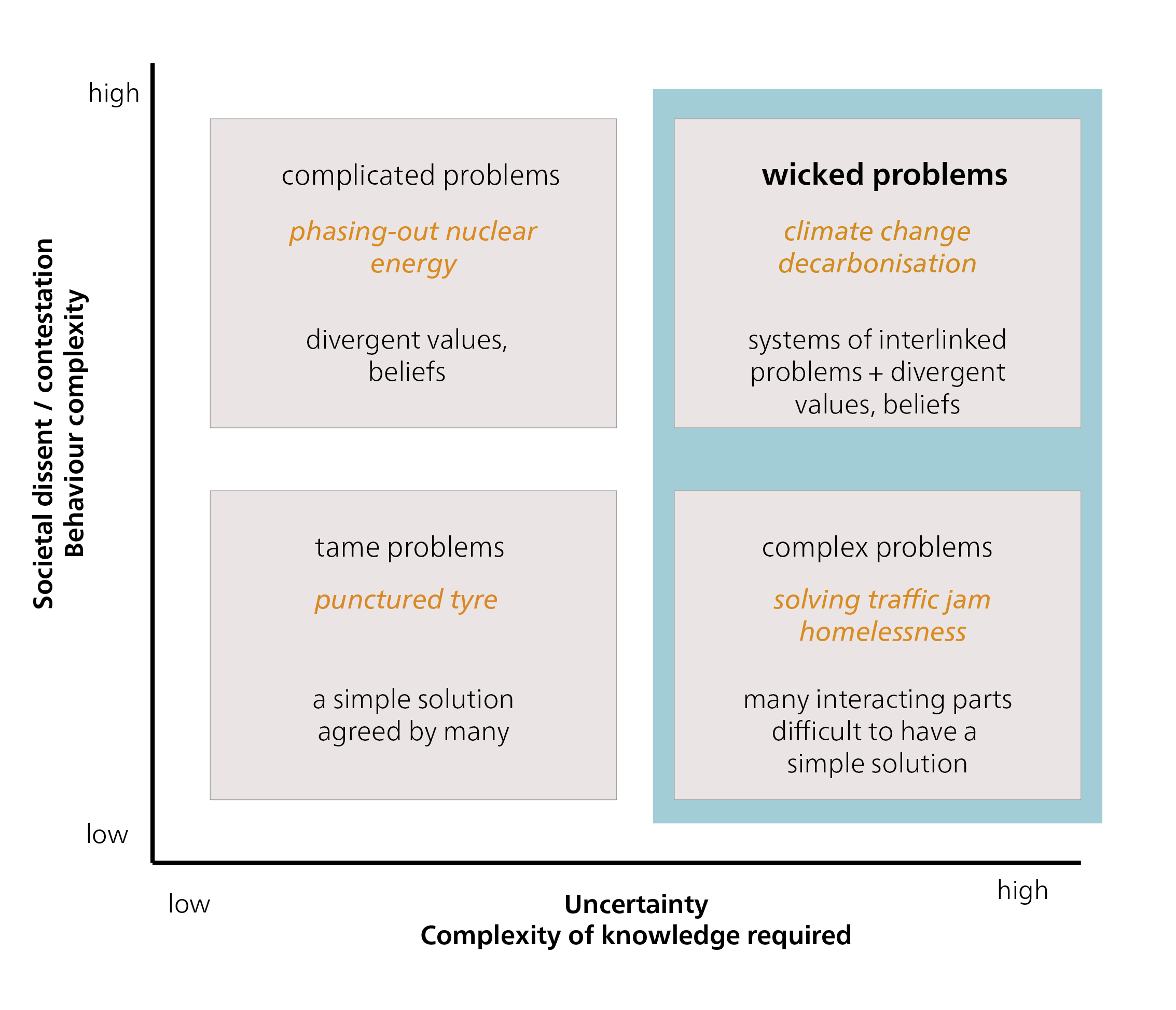
How have we maneuvered ourselves into the current situation, where wicked problems pose such a challenge to sustainable development? In this textbook, we will analyse and learn to understand three key global challenges:
the emergence of human-induced global warming;
the persistence of global poverty and rising inequalities;
and the threat of species extinction and overexploitation of natural resources.
The debate about human influence on global warming and climate change has intensified since the publications of the Intergovernmental Panel on Climate Change (IPCC). The driving force behind global warming is our dependence on oil and other fossil fuels for transport, (electricity) generation, agriculture, and many everyday products. Another wicked problem is global poverty. Although there have been global efforts to reduce poverty for decades, the globalized market economy often leads to increased poverty in certain regions, and the gap between rich and poor seems to be widening overall (Chancel et al. 2021). High-income countries have maintained their prosperity and living standards at the expense of others. These are “externalized costs”, and they include environmental degradation. For example, the wealth and living standards of high-income countries are largely responsible for the threat of species extinction and the overuse of natural resources (Lessenich 2018). In addition to the above mentioned “big three” – climate change, poverty, and biodiversity loss – there are many other global sustainability challenges, such as deforestation, desertification, declining soil fertility, dwindling fish stocks, pollution, wars, conflicts, and increasing migration.
In analysing these comprehensive challenges we must also consider the temporal dimension. In 2004, graphs depicting socioeconomic and Earth system trends from 1750 to 2000 were first published, revealing a dramatic upsurge and aptly termed “The Great Acceleration” (Steffen et al. 2004).
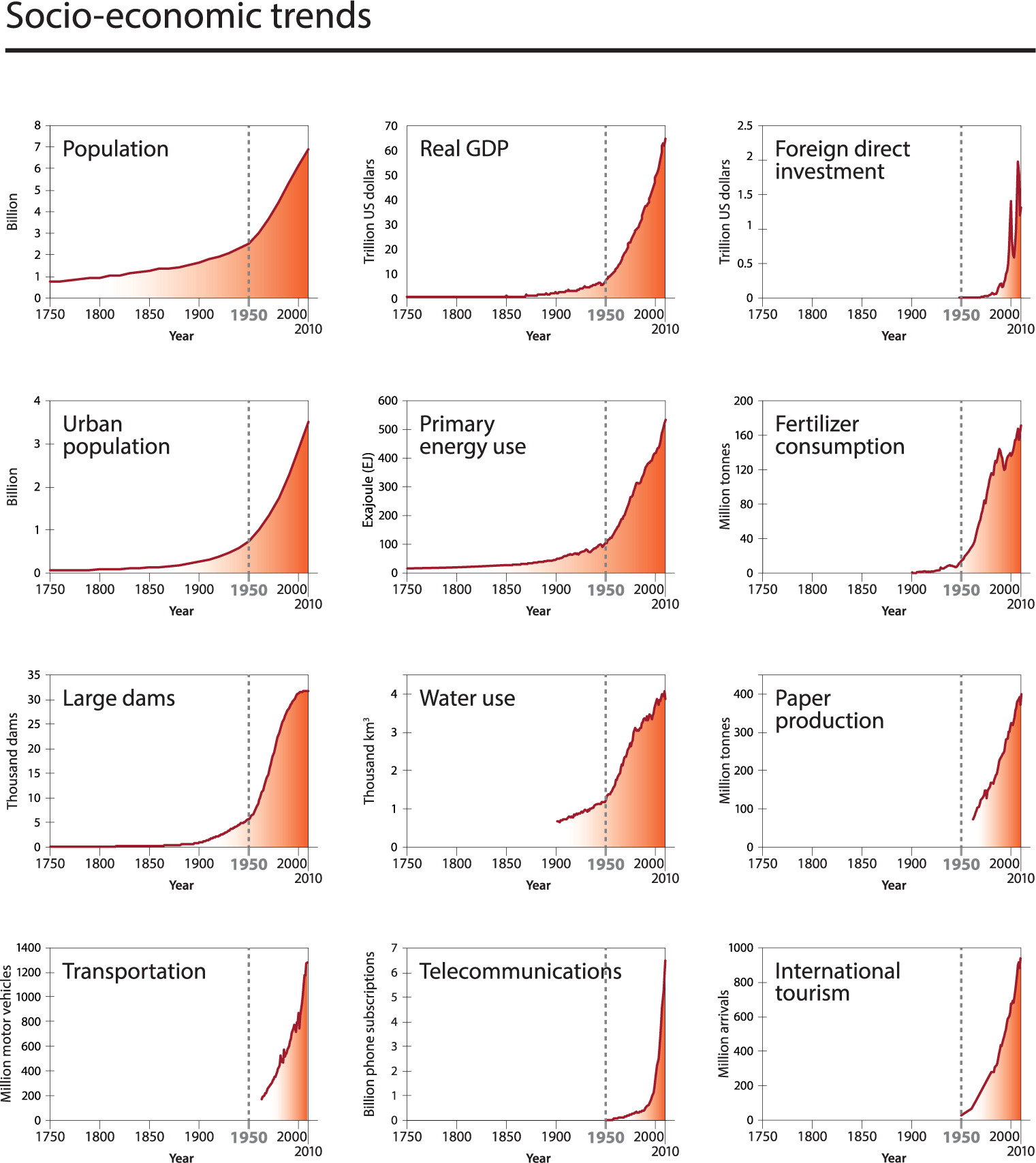
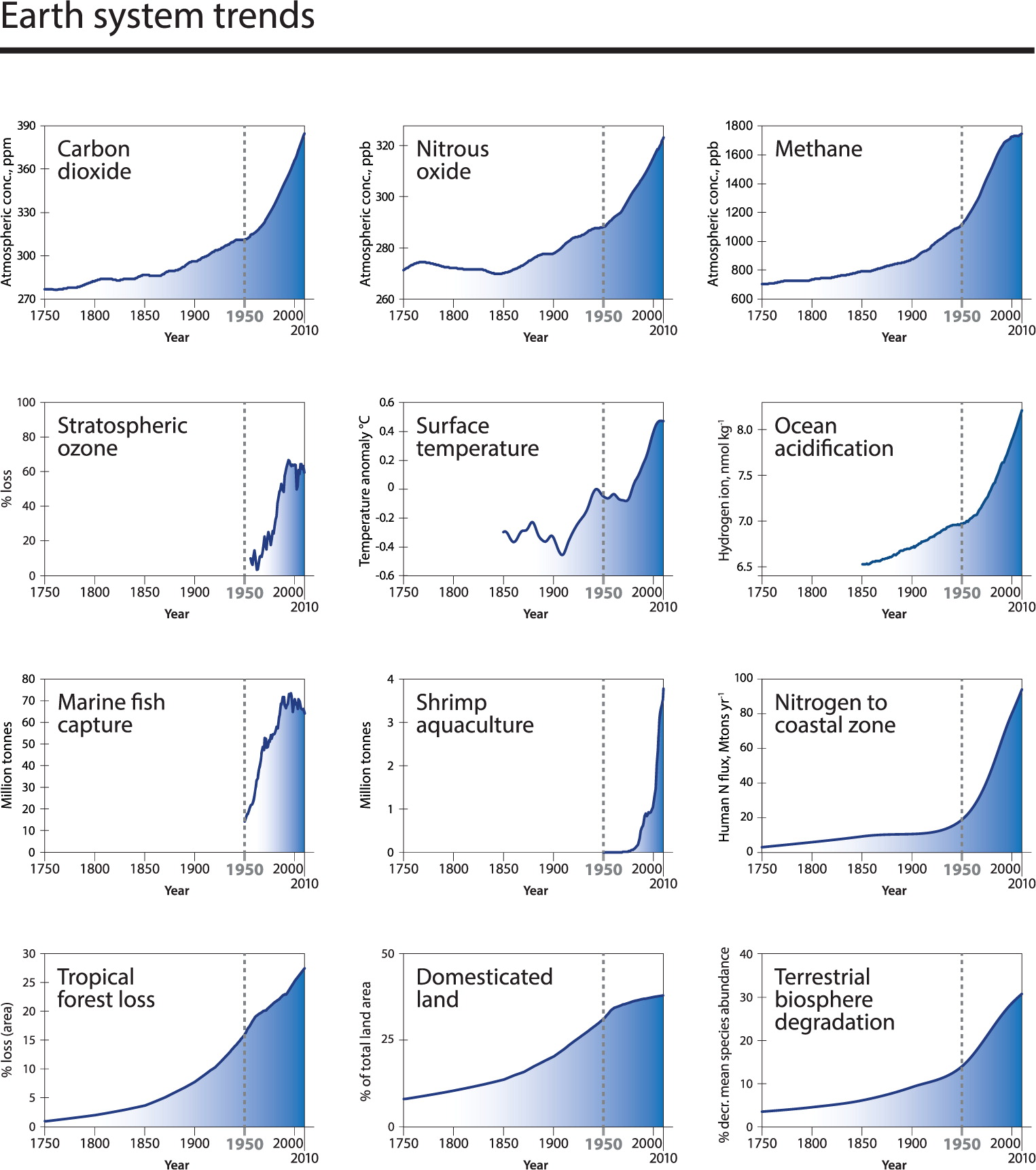
The Great Acceleration described the exponential growth dynamics that occurred as a result of the Industrial Revolution, which led to a surge in productivity in the mode of production and a significant increase in material wealth. At the same time, but to a much lesser extent, there was a massive increase in natural resource consumption and emissions. Socioeconomic growth went hand in hand with the acceleration of biophysical trends. Figure 1.4 describes some examples of important biophysical and socioeconomic indicators, all of which start to increase with the Industrial Revolution. From the middle of the 20th century, the trend towards exponential growth becomes apparent.
Resource extraction has increased significantly in recent decades, from 22 billion tonnes in 1970 to 70 billion tonnes in 2010 (UNEP 2016). Global warming is another pressing issue. The latest IPCC report (2023) predicts an increase in global average temperature of between 1.5 and 5.8 degrees Celsius, depending on the scenario and future emissions. Another alarming phenomenon is deforestation. Every two seconds, an area of forest the size of a football field is cut down – an area the size of New York City every day. And then there is the decline in biodiversity, marked by the extinction of animal and plant species, which threatens the ecological diversity of our planet.
The Great Acceleration (Figure 1.4) describes the observable and measurable (negative) developments of key socioeconomic and biophysical indicators since 1950. The causes of these negative developments can be far removed from the place where the problems arise or become most evident. For example, job losses in one country may be caused by a multinational company’s decision to relocate part of its operations to another country, in order to maximize profits. We cannot hope to fix such issues unless we understand how the system – in this case, the globalized economy – works. Similarly, we need to understand the Earth’s global climate systems to imagine what the consequences of global warming might be in a particular area or region.
This is why many of the methods and concepts of sustainability science require systemic thinking. A systemic thinking approach often begins with brainstorming to create a “rich picture” of all the factors you need to consider in order to understand the current behaviour of the system in question. For example, in the case of a multinational company closing a particular business unit, these would be the factors that might influence the decision to close the unit rather than to continue or expand it. While an initial mapping may look overly complex or even messy, creating a linear flowchart can help clarify the flows of inputs and influences. This kind of mapping may already reveal opportunities to reassess the relevant influences and redesign the system to avoid unwanted outcomes. However, further work may be required to develop “conceptual models” of the system that identify unforeseen opportunities for improvement.
Incorporating systemic thinking into the methods and concepts of sustainability science enables us to tackle the complexity of problems and develop sound strategies for sustainable development. Systemic thinking thus provides an important basis for understanding and shaping the different understandings and concepts of sustainable development, as the next section discusses in more detail.
1.3 Sustainability: When did we start talking about it?
In 1713, Saxony’s chief mining officer, Hans Carl von Carlowitz, demonstrated the necessity and possibility of “sustainable forestry” in a book entitled Sylvicultura oeconomica, oder hauswirthliche Nachricht und Naturmässige Anweisung zur wilden Baum-Zucht (Sylvicultura oeconomica, A Guide to the Cultivation of Native Wild Trees). Another sustainability pioneer was Duchess Anna Amalia, the mother of Duke Carl August. In the late 1700s, she initiated the world’s first forestry reform, which was aimed at ensuring a continuous and steady supply of timber. At that time, Europe had an insatiable appetite for materia prima, or raw materials needed for building ships and houses, and for cooking and heating. This demand threatened to deplete resources and endanger their long-term survival.
In the 18th century, scholars in Germany as well as in other parts of Europe addressed the finite nature of natural resources. Unlike von Carlowitz, however, no one spoke about sustainability. One important aspect was the provision of food for a growing population. Before industrialization, economic growth was largely determined by nature as a factor of production, such as the number of mines or ships built, or the amount of land available for farming. However, Thomas Robert Malthus, a British economist, warned that food production would not be able to keep up with the rapid population growth following the Industrial Revolution. Malthus believed that the population would grow at an exponential rate, while food production would increase at a linear rate. Although Malthus’s thesis did not come true in the dramatic way he predicted, his work is often regarded as the first systematic treatise on the limits to growth in a finite world.
For a time, Malthus’s ideas fell out of favour, as unlimited growth seemed possible due to the Industrial Revolution and the rise of capitalism. Talk of natural limits didn’t resurface until the mid-20th century, when a “neo-Malthusian” perspective re-emerged in the context of the Club of Rome (founded in 1968), debates on planetary boundaries, and critiques of growth. While Malthusianism traditionally focuses on external, physical limits to growth, the ecological economist, Giorgos Kallis, proposes a different approach. Kallis (2019) advocates personal moderation and voluntary restraint, an approach to life that has deep roots in Romanticism and ancient Greek philosophy. He argues for an inner limit to our wants, to free us from the economic assumption of scarcity and the associated obsession with growth. While acknowledging the reality of external limits, Kallis believes they should not dominate the environmental argument against limitless growth. Kallis therefore asks whether it makes sense to frame climate change primarily as a problem of external limits, of scarcity, or of a finite atmosphere that cannot absorb any more of our emissions.
In the Malthusian logic, we would have to ever increase our production to meet the needs of a world with limits. As long as this mindset persists, the focus is on how we can exceed those limits, and how we can push the capacity of the climate to absorb a growing population and its demands.
1.3.1 The clash of economy and ecology
Originally, sustainability was a principle of resource economics that combined the economic goal of maximizing long-term forest use with ecological conditions for regrowth. In the 19th century, the concept of an “eternal forest” emerged with the aim of putting an end to overexploitation, and to ensuring a long-term supply of wood, a vital raw material. Forestry scientists such as Heinrich Cotta developed mathematical methods for calculating timber stocks and growth. Over time, however, the focus shifted towards the pure yield theory, which focused on short rotation periods and high-yield monocultures, as well as on maximizing financial benefits. The focus was suddenly on the highest possible direct cash yield instead of a steady high timber yield. Natural cycles were replaced by capitalist dynamics; exchange value took precedence over utility value. This devalued the guiding principle of sustainability, and it took over a hundred years, until the 1960s and 70s, for the scientific disciplines of ecology and sustainability to regain prominence.
1.3.2 Club of Rome and The Limits to Growth
“If the present growth trends in world population, industrialization, pollution, food production, and resource depletion continue unchanged, the limits to growth on this planet will be reached sometime within the next one hundred years.” (Meadows et al. 1972, 23)
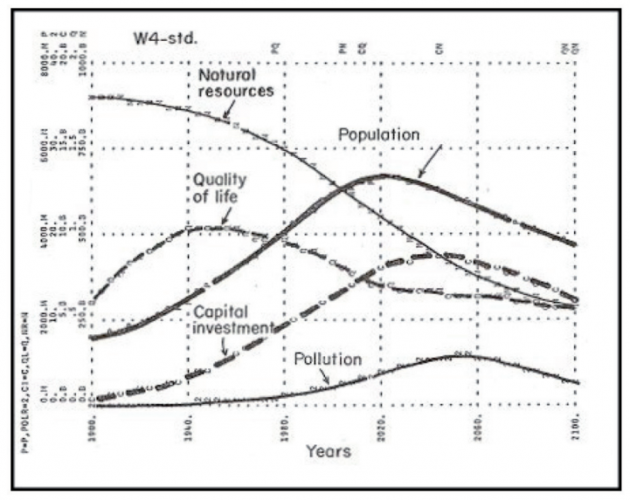
In 1972, the Club of Rome published a report, The Limits to Growth, which introduced a much broader understanding of “sustainability”. Scientists begin to call for a global state of equilibrium, or homeostasis, that would only be possible through coordinated international action. They integrate economic, ecological, and social aspects of sustainability and use the model of the dynamics of complex systems (“system dynamics”) to understand the world. They take into account the interactions between population density, food resources, energy, materials, capital, environmental degradation, and land use. Computer simulations of different scenarios show similar results: a catastrophic decline in the world’s population and living standards within 50 to 100 years, if current trends continue. The problem with the resource- and emission-intensive industrialized societies is that growth is not linear but exponential. In the long run, this kind of growth leads to collapse. And ecological collapse can only be prevented through a course correction, argued the report.
The Meadows Report, as it is also known, was heavily criticized for its predictions and methods. Some critics argued that the system dynamics model was too simplistic and failed to consider important factors such as technology and innovation. Others said insufficient account was taken of human adaptability and the possibility of political solutions and change. Others yet criticized what they called a Malthusian outlook and a pessimistic view of the future. Despite these criticisms, however, the report sparked an important debate about sustainability and the need to protect the environment.
A year later, E.F. Schumacher published Small is Beautiful: Economics as if People Mattered (1973). Schumacher challenged the prevailing notion of limitless economic growth and technological progress. Instead, he advocated for a sustainable, human-centreed economy that respects local communities and the environment. Schumacher argued that a decentralized economy, based on human values, not just profit, would create a better future for all. He also emphasized the importance of education and cultural development in creating a sustainable society.
1.4 From the development debate to the sustainability debate
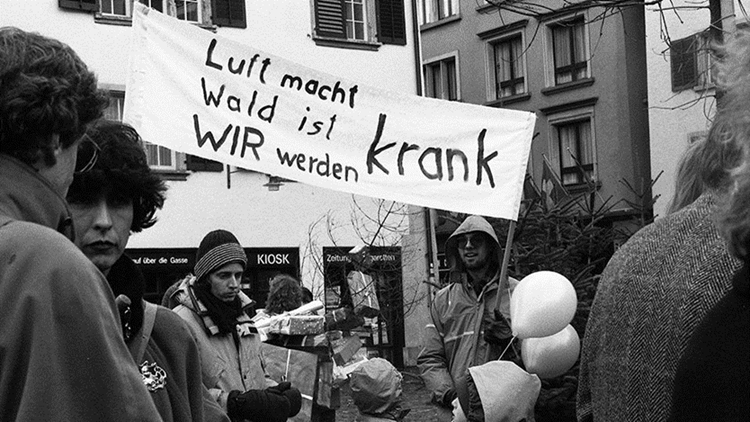
Worsening air and water pollution helped raise the profile of environmental issues in politics and the media. Greenpeace was founded in 1971. In the 1960s and 1970s, Paul Crutzen and his research team studied the impact of nitrogen oxides on the ozone layer, predicting that this layer would be greatly depleted by human-made CFCs. The use of CFCs in refrigerators and air conditioners was subsequently banned. In response to the growing importance of environmental issues, the United Nations organized the first ever major environmental conference in Stockholm in 1972. The United Nations Conference on the Human Environment, as it was called, led to the creation of the United Nations Environment Programme (UNEP) and independent environment ministries in many countries.
The emergence of environmental problems in the 1970s and 1980s coincided with the first “development crises” after the Second World War. In those days we still spoke of “underdeveloped countries”. Following the success of the Marshall Plan in rebuilding Europe after World War II, it was assumed that similar programmes, such as a Marshall Plan for Africa, would lead to a rapid catch-up in socioeconomic development of the poor countries of the Global South. But the 70s and 80s proved otherwise. Even exemplary countries such as Mexico and Brazil succumbed to debt crises, demonstrating that achieving socioeconomic development and overcoming poverty were far more complex challenges.
From then on, it was clear that issues related to development and the environment had to be considered together at the intergovernmental level. In 1983, the United Nations set up a World Commission on Environment and Development, chaired by the Norwegian Prime Minister, Gro Harlem Brundtland.
1.4.1 Brundtland Commission
Gro Harlem Brundtland appointed 22 commission members, ¾ of whom were from the Global South. During this time, the Soviet Union, facing economic stagnation, was beginning to change political course. As the arms race with the US had contributed to a substantial budget deficit, Mikhail Gorbachev, the newly appointed General Secretary of the Communist Party of the Soviet Union, introduced major reforms. At the same time, a new world view and global consciousness were starting to emerge. It was against this background that the Brundtland Commission was tasked with drawing up a report on the perspective of global, sustainable, environmentally friendly development up to and beyond the year 2000. The report presented in 1987 was entitled Our Common Future, but it’s often referred to as the Brundtland Report.
The Brundtland Report found that global environmental problems were mainly caused by unsustainable consumption and production patterns in the North and severe poverty in the South. The overexploitation of nature and the depletion of natural resources were exacerbating inequalities (of income and wealth), increasing absolute poverty, and posing a threat to peace and security. The Report sought to develop a fair and just definition of sustainability:
“Sustainable development is development that meets the needs of the present without compromising the ability of future generations to meet their own needs.” (wcedOurCommonFuture1987a?)
This definition introduced an ethical perspective into the sustainability debate, placing the principle of responsibility – for both present and future generations – at its centre. By focusing on human needs, the Brundtland Commission adopted an anthropocentric position. The Commission thus identified three key principles for analysing problems and guiding action: a global perspective, the interconnectedness of environment and development, and the pursuit of justice or equity. The concept of justice/equity was further divided into two distinct perspectives:
- The intergenerational perspective: Responsibility for future generations.
- The intragenerational perspective: Responsibility for people living today, particularly in developing countries, and ensuring equity within countries.
1.5 From Rio 1992 to today
After the Brundtland Report’s call for international action, the focus turned to translating demands and proposals into binding treaties and conventions. The UN chose a conference as an instrument for this, holding it exactly 20 years after the first global environmental conference, the 1972 Stockholm Conference. The June 1992 UN Conference on Environment and Development – held in Rio de Janeiro, Brazil, and also known as the Earth Summit – was the largest international conference to date, with delegates from over 170 nations.
The Rio Earth Summit adopted the following five documents:
- A Forest Declaration, aimed at the ecological management and protection of the world’s forests;
- A Climate Protection Convention committing states to reducing greenhouse gas emissions worldwide to 1990 levels;
- A Biodiversity Convention to combat the decline in biodiversity through steps that are binding under international law;
- The Rio Declaration on Environment and Development; and
- Agenda 21, probably best known of the five agreements, according to which national governments are responsible for implementing the sustainability model in their countries.
The Rio Declaration on Environment and Development emphasizes that long-term economic progress is only possible using an ecosystem approach. This, in turn, requires a new and equitable global partnership among governments, people, and key societal groups. To achieve this, international agreements are necessary to protect the environment and the development system. The Rio Declaration established key principles of sustainable development, including precaution and polluter pays. For example, Principle 15 states:
“In order to protect the environment, the precautionary approach shall be widely applied by States according to their capabilities. Where there are threats of serious or irreversible damage, lack of full scientific certainty shall not be used as a reason for postponing cost-effective measures to prevent environmental degradation ” (UN 1992).
In December 1992, the Commission on Sustainable Development (CSD) was established to ensure effective follow-up of the Summit.
1.5.1 Agenda 21: Think globally – act locally
Agenda 21, which contains 40 chapters, addresses all critical policy areas and actions for sustainable development. According to the Preamble,
“…integration of environment and development concerns and greater attention to them will lead to the fulfilment of basic needs, improved living standards for all, better protected and managed ecosystems and a safer, more prosperous future. No nation can achieve this on its own; but together we can – in a global partnership for sustainable development.” (UN CSD 1992)
1.5.2 The Millenium Development Goals (MDGs)
The core principles of Agenda 21 – empowering women, protecting the environment, and promoting an equitable and inclusive society – laid the foundation for the Millennium Development Goals (MDGs). Adopted by the UN in 2000, the MDGs comprised eight specific goals to be achieved by 2015. Although not all of these goals were met, the MDGs raised significant awareness of the need for sustainable development. The MDGs were succeeded by the Sustainable Development Goals (SDGs), which were adopted by the UN in 2015.
1.5.3 Rio+20
Two decades after the historic 1992 Earth Summit that adopted Agenda 21, the international community gathered again for Rio+20, the UN Conference on Sustainable Development. The main objective of this 2012 conference in Rio de Janeiro was to reaffirm global political commitment to sustainable development. Participants, including government leaders and NGO and private sector representatives, discussed a wide range of issues, including poverty eradication, environmental protection, sustainable energy, food security, and resource management. The Summit’s key outcome was the adoption of a declaration entitled “The Future We Want”. This declaration renewed the international community’s commitment to sustainable development and to the Rio Principles and past action plans, and outlined further measures to achieve these goals. In addition, Rio +20 paved the way for a universal development framework to define global sustainability goals and priorities beyond 2015.
1.5.4 The 2030 Agenda and the Sustainable Development Goals (SDGs)
“We are the first generation that can put an end to poverty and we are the last generation that can put an end to climate change, so we [must] address climate change.” Ban-Ki Moon, UN Secretary General 2007–2016, on the 2030 Agenda
Rio +20 laid the foundation for the 2030 Agenda, which the UN adopted in 2015. The 2030 Agenda builds on the results of Rio+20 and sets out a comprehensive framework for sustainable development. The 2030 Agenda is based on five key principles or pillars (the 5 Ps) and introduces the 17 Sustainable Development Goals (SDGs), which aim to create a sustainable and just world by 2030.
1.5.5 2015 Paris Climate Agreement
The Paris Climate Agreement of 2015 is a landmark international agreement adopted at the 21st Conference of the Parties (COP 21) to the UN Framework Convention on Climate Change (UNFCCC) in Paris. The Agreement aims to limit the global temperature rise to well below 2 degrees Celsius compared to pre-industrial levels, and to endeavour to limit it to 1.5 degrees Celsius. The Paris Agreement is based on the principle of common but differentiated responsibilities and respect for national circumstances. It encourages all countries to take action to reduce their greenhouse gas emissions and to set themselves voluntary climate targets, known as Nationally Determined Contributions (NDCs).
The 2015 Paris Climate Agreement applies to every country that has ratified it, including Switzerland. As a Party to the Agreement, Switzerland has committed to contributing to the global reduction in greenhouse gas emissions and to implementing the Agreement’s objectives.
1.5.6 Conclusion – there is progress, but it’s too slow
While there has been some progress in institutionalizing and disseminating sustainability approaches in business, policymaking, and other areas, a large number of studies show that the world as a whole is on an unsustainable course (see the Voluntary National Review of Switzerland 2022). A similar picture is painted by various studies on the global environmental situation, such as UNEP’s Global Environment Outlook 5 (GEO-5) published in 2012, the 2010 Millennium Development Goals Report (MDGs Report 2010), and reports on the 2030 Agenda and climate change (IPCC 2022). As these studies show, the international community is a long way from sustainable, intergenerationally equitable ecological, social, and economic development.
For example, international climate policies have yet to halt the rise in CO2 emissions. As the main driver of anthropogenic climate change, these emissions have increased by around 50% since 1990. Species loss continues to accelerate in many places. The global fight against poverty is falling short of the desired goals, and economic globalization over the past three decades has worsened socioeconomic in-equality in many countries, often linked to sociopolitical and sociocultural disparities.
1.6 The guiding principle of sustainable development as a normative concept
Turning the concept of sustainability into action and developing implementation strategies is a major challenge for our society. There are different understandings and concepts of sustainability and sustainable development, with no consensus on how to achieve sustainability and which measures to prioritize. Some of these understandings are presented below. The diversity of approaches reflects the different perspectives and interests of different stakeholders. To navigate this complexity, we need to reconcile economic, social, and environmental considerations. This requires an integrative approach. The challenge is to define common goals and develop strategies to achieve sustainability at all levels – global, national, regional, and local. We need broad societal participation and dialogue, as well as cooperation between governments, business, civil society, and research institutions, to find solutions and drive the necessary change.
“When powerful metaphors become fashionable buzzwords, we risk that diversity is accompanied by vagueness, i.e. the phenomenon of a term that has several meanings that ‘have so much in common that it is difficult to separate them’.” (Strunz 2012, 113; as cited in Feola 2015, 377)
While the concept of sustainability typically carries a positive connotation, it is subject to diverse interpretations. For it to function as a robust guiding principle across ecological, social, and economic dimensions, clear criteria are essential. However, this raises a fundamental question: on what grounds can these criteria be established?
According to Hirsch Hadorn and Brun (2007), “sustainable development” should:
- Fulfil needs…
- …in a just way,
- …with a view to people living today and in the future, and
- taking into account the diversity of values and the limits to which nature can be used.
The guiding principle of sustainable development is therefore not merely a product of scientific research; it is, first and foremost, a normative, ethically grounded concept. It brings together “ethical and analytical ideas” and formulates “norms that express what is desirable and what should happen” (Renn et al. 2007, 39). As a result, sustainable development is a social process of negotiation and decision-making – of searching, learning, and gaining experience – that is guided by ethical considerations. Accordingly, sustainability research must always be aware of its involvement in social processes of perception and evaluation.
1.6.1 What values and norms should we be guided by, and why?
Moving from the theoretical framework of sustainable development to its practical implementation requires the consideration of ethics. Ethics provide evaluation criteria, methodological procedures, or principles for “justifying and criticizing rules of action or normative statements about how we should act” (Fenner 2008, 5). Thus, ethics provide a framework for structuring and justifying the complex decisions that arise in dilemmas. Unlike problems with a single, optimal solution, a dilemma is more complex and involves the careful weighing of trade-offs and different courses of action. The core function of ethics is therefore not to solve monocausal problems, but to structure and categorize complex dilemmas.
Put simply, “morality” refers to personal or social beliefs about right and wrong, while “ethics” is the philosophical study of these beliefs. Ethics studies the rules and principles that “ought” to govern human behaviour. Ethics can be divided into general and applied ethics (Figure 1.7).
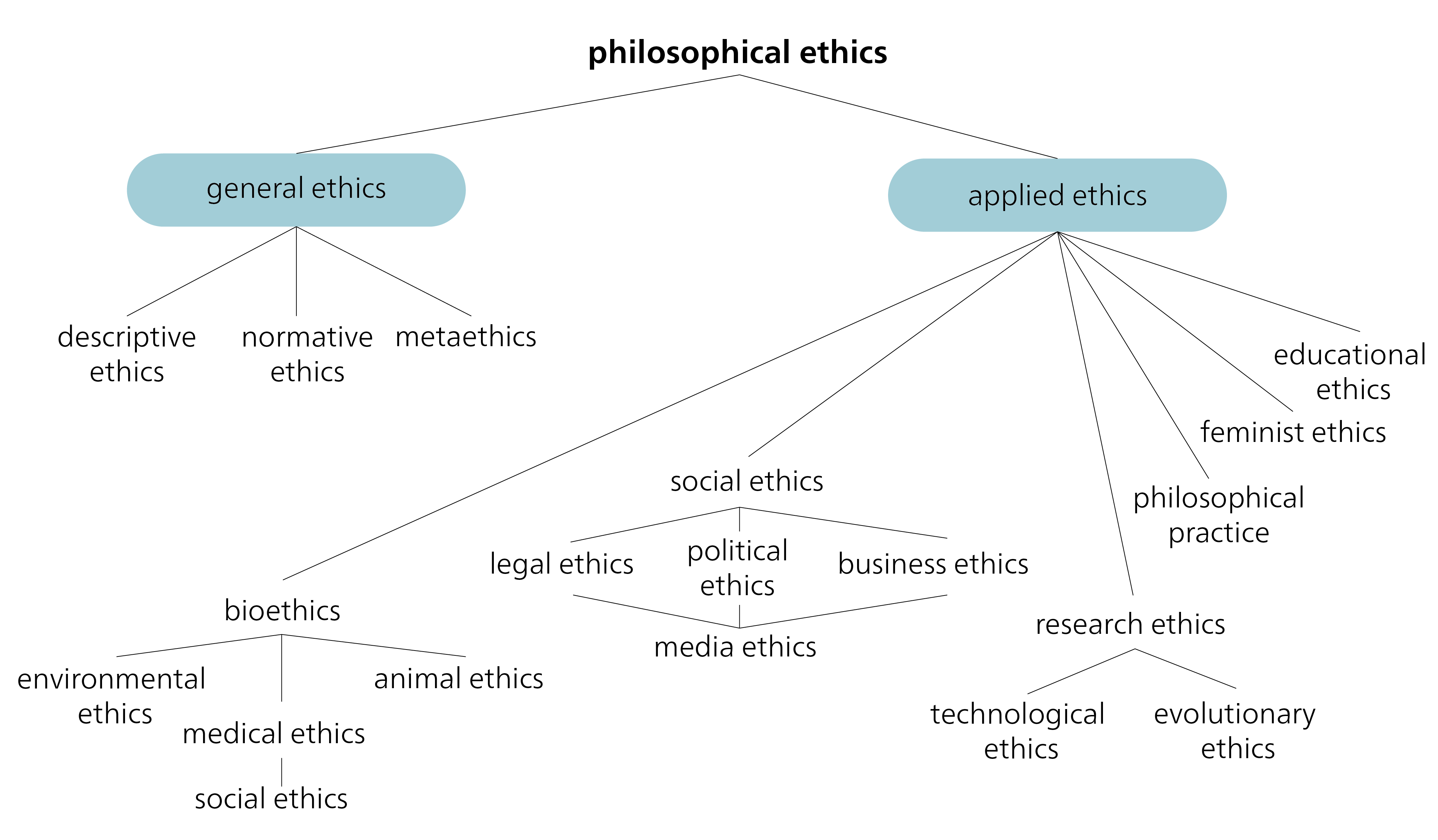
General ethics provides us with methods and concepts to discuss fundamental moral problems. It consists of three branches: normative ethics, descriptive ethics, and metaethics. Normative ethics focuses on determining what is morally right or wrong. For example, questions about what constitutes a good life can have different answers, depending on people’s values.
For this reason, normative ethics is further divided into teleological and deontological approaches. Teleological ethics (rooted in telos, the Greek word for “end”, “purpose”, or “goal”) evaluates actions based on the good they produce. Utilitarianism, for example, is a teleological theory that evaluates actions based on the resulting utility or happiness. One of the first systematic elaborations of utilitarianism is Jeremy Bentham’s (1748–1832) An Introduction to the Principles of Morals and Legislation (1780). Deontological ethics, on the other hand, evaluates actions on the basis of their characteristics rather than their consequences. Its root is deon, Greek for “duty”. An example of a deontological ethical theory is Kantian ethics, developed by the German philosopher Immanuel Kant.
The distinction between teleological and deontological approaches is often discussed using the “trolley problem” (see further reading box below).
1.6.2 The imperative of responsibility – Hans Jonas
Hans Jonas’s “imperative of responsibility ” (1979) offers an important contribution to the sustainability debate by emphasizing our ethical responsibility for future generations and for nature. Jonas’s approach, which has been described as a kind of “ethics of the future”, aims to address the new challenges posed specifically by a technological civilization. He views the concept of ethical responsibility towards future generations as an asymmetric, non-reciprocal relationship (Jonas 1987, 177). The asymmetry is derived from the power of a “moral subject” over someone or something that requires care; Jonas describes the vulnerability of life (ontological vulnerability) and responsibility as our duty of care to protect other beings from harm (Jonas 1987, 391).
Jonas’s approach differs from other ethical theories in that it doesn’t take the existence of humanity for granted: instead, it includes duties towards future generations as well as to nature. Jonas argues that the first duty of an “ethics of the future” consists in recognizing the distant effects of human action (Jonas 1987, 64). Given the uncertainty about the long-term consequences of human action, he proposes a decision-making principle based on the Latin term, in dubio pro malo, which he interprets to mean: “[…] when in doubt, give the worse prognosis precedence over the better, as the stakes have become too high for the game” (Jonas 1987, 67). Jonas thus develops a new categorical imperative, emphasizing the need to preserve both nature and humanity. It is based on the idea that nature has an inherent value and purpose: “Act in such a way that the effects of your action are contractual with the permanence of genuine human life on earth”, or “Act in such a way that the effects of your action are not destructive to the future possibilities of such life” (Jonas 1987, 36).
Already in the late 1970s, therefore, Hans Jonas articulated a fundamental uncertainty about the risks and harm that could arise for future generations from the technologies that were being used, such as nuclear energy. Decision-making around issues such as new technologies requires a continuous evaluation of risks and opportunities, often amid incomplete information and uncertain future forecasts. These choices not only impact the environment, but also raise ethical questions about our obligation to ensure sustainability for future generations. Jonas’ imperative of responsibility emphasizes the link between responsibility and duty as key concepts in the sustainability debate. According to Jonas, current generations have a forward-looking responsibility to future generations. He leaves open, however, the extent of this duty, and whether future generations are entitled to absolute or comparative standards.
Jonas’ imperative of responsibility can be considered in connection with various areas of responsibility that represent different ethical approaches: anthropocentrism, pathocentrism, biocentrism, and physiocentrism.
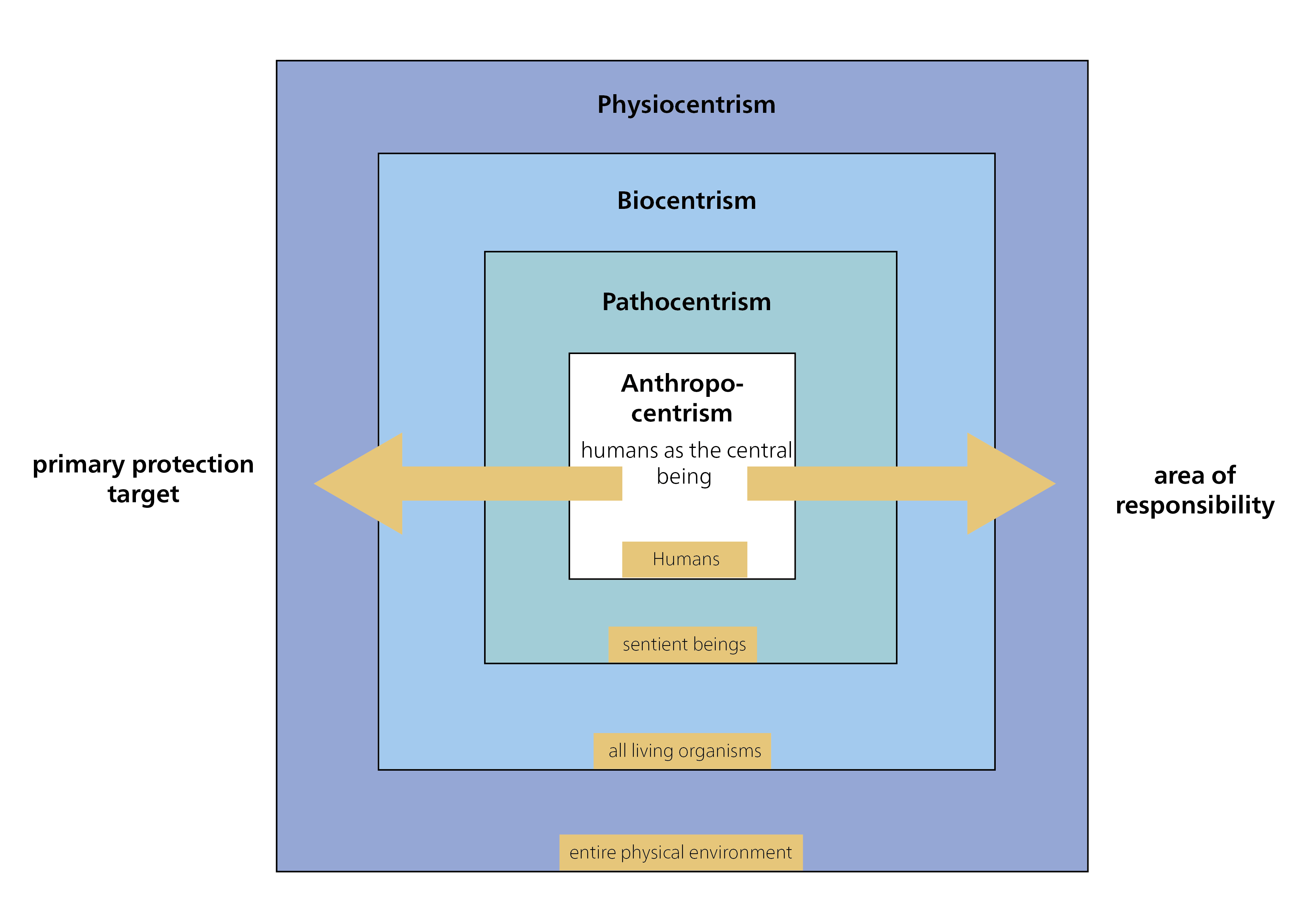
Anthropocentrism is the world view that places humans at the centre of importance, emphasizing a primary responsibility towards human society and its well-being. This includes considering the needs and interests of both present and future generations. Pathocentrism, on the other hand, extends responsibility towards all sentient beings and their well-being. It recognizes that not only humans, but also animals and other living beings, have the right to be free from suffering and harm. Biocentrism, in turn, recognizes the intrinsic value of all living organisms and focuses on the protection and preservation of biodiversity.
Hans Jonas’ imperative of responsibility reconciles all of these different areas of responsibility. It urges us to take responsibility for people as well as for other living beings, nature, and the environment. In doing so, it is important to adopt a balanced and comprehensive perspective that takes into account long-term effects and the well-being of all.
By integrating these different areas of responsibility, we can cultivate a holistic and sustainable ethic that takes due account of the needs and interests of all aspects of life and nature.
1.7 Sustainable development in the context of development debates
Is “sustainable development” a development theory? Yes and no. No, because sustainable development is a broader social model and acts as an overarching framework that encompasses various development theories. Yes, because sustainable development is a normative theory that de facto competes in scientific and social practice with other theories of social and, in particular, socioeconomic development.
Development theories analyse social development, either retrospectively or prospectively, and either as a whole or through specific aspects (e.g. economic development). The retrospective study of social development seeks to explain past or current social developments and to draw lessons for future planning and development policy. The prospective study of social development aims to inform social development management and policy. Development theories can be categorized into different types: normative, strategic, and explanatory theories. Each type focuses on different aspects and objectives of development research.
Normative theories focus on the question of what development should look like, and what normative goals it should achieve. They examine values and goals associated with development, often referring to concepts such as social justice, sustainability, or poverty alleviation. Normative theories emphasize the definition of criteria for good development, and provide a normative framework for policy decisions and measures. Examples include the theory of sustainable development, John Rawls’ theory of social justice, or Amartya Sen’s capability approach.
Strategic theories investigate which strategies and measures are needed to achieve desired development outcomes. They focus on questions of policy design, resource allocation, and the implementation of measures, analysing how specific approaches, such as neoclassical growth theory, can promote development.
Explanatory theories aim to explain the causes and mechanisms of development. They analyse factors that drive development processes in societies and study the links between the different variables. This involves examining economic, social, political, or cultural factors to identify patterns and connections. Examples include modernization theory and dependency theory.
Note: All theories are based on normative foundations – i.e. underlying values and beliefs – and therefore imply, even unintentionally, certain ideas about how society should develop.
1.8 Sustainability models
1.8.1 Three dimensions of sustainability
The established three-sector model of sustainability, introduced in the 1987 Brundtland Report, seeks to balance environmental, economic, and social concerns. This model, which later also became known as the “triple bottom line” model, emphasized that economic development should be profitable while ensuring that environmental and social impacts remain neutral. On closer inspection, however, the model – initially depicted as a building with three pillars – has a major weakness. It was intended to suggest that if any one pillar was weak, the system as a whole would be unsustainable. However, it could be argued that removing one of the pillars – or even the two outer pillars – would not make the building collapse if the remaining pillar(s) were strong enough. Despite its widespread use and overall success, the model struggles with transparency and equity. For example, while economic success is easily measured through quantitative indicators, it is more challenging to find similar metrics for social well-being, especially regarding its emotional aspects. Some critics argue that the model prioritizes conventional economic thinking, neglecting important social aspects. An overemphasis on human economic systems can also prevent us from seeing our dependence on non-human ecological systems.
1.8.2 Sustainability as an intersection
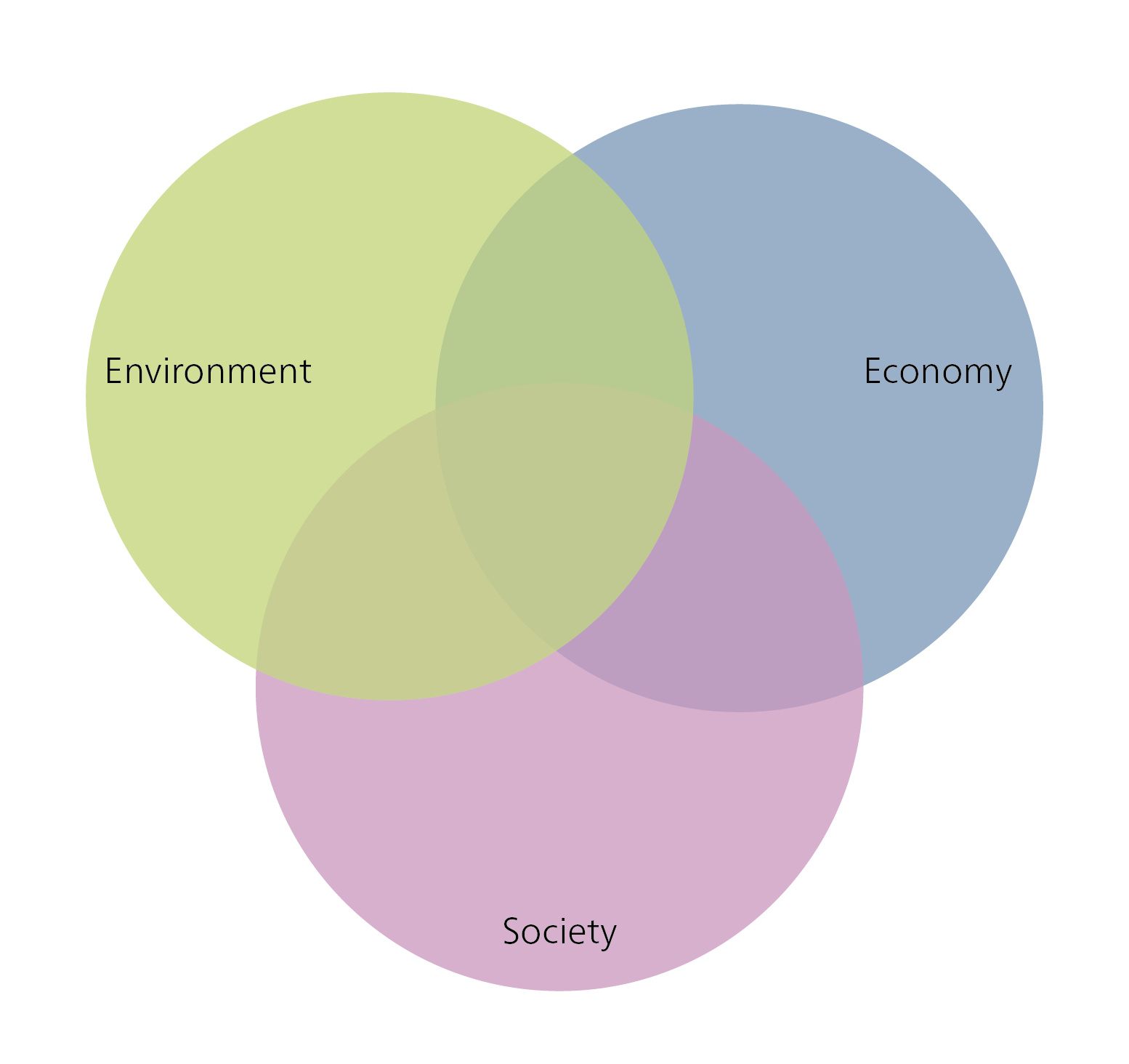
A model displaying the three sectors as a Venn diagram (overlapping rings or circles, sometimes known as the intersection or triad model) offers an alternative to the separate pillars, emphasizing the interconnectedness of the three dimensions. This model illustrates that there can be a closer connection between two areas, and that the boundaries are fluid.
1.8.3 Nested sustainable development
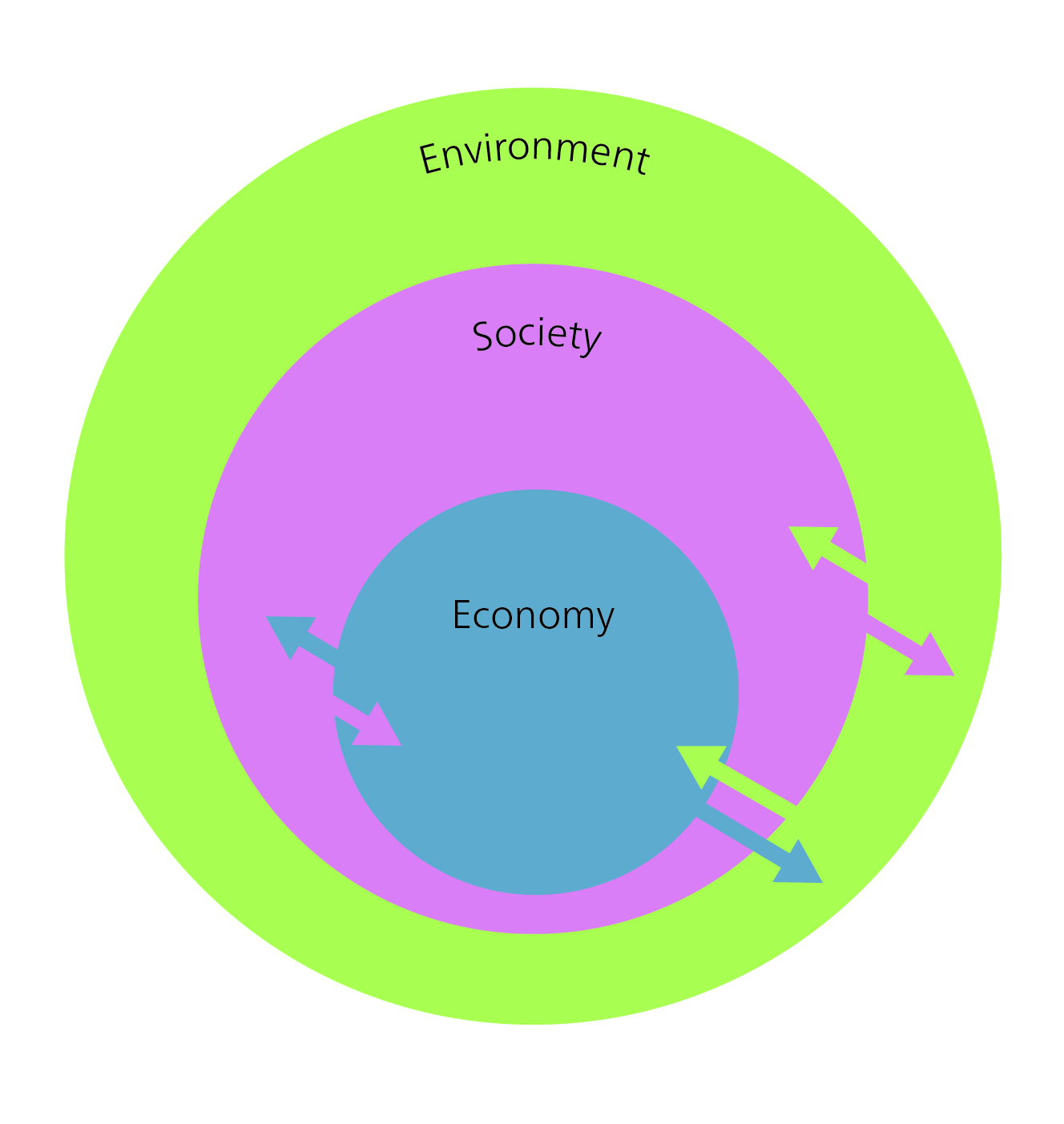
Giddings et al. (2002) challenge the idea of separate spheres for the economy, society, and environment. They propose a “nested” model, where the economy is seen as part of society, which in turn is embedded in the environment. This model, they argue, ensures that economic decisions are always constrained by social and environmental factors. Global ecosystems form the basis for social systems (i.e. society). Embedded therein is the economy, which serves society’s needs. A potential drawback of this model, however, is that if the economy is the starting point for all sustainability considerations, there is a risk of prioritizing it over social and environmental considerations.
1.8.4 A four-dimensional model of sustainability
One problem with the three-sector model of sustainability is that that it is unclear what falls within the broad “social” sphere. It has therefore been suggested that a fourth dimension be added, to emphasize certain aspects that might otherwise remain hidden in the social sector. For example, Jon Hawkes, an Australian cultural commentator, has suggested adding “cultural vitality” as a fourth pillar of sustainability, in addition to environmental, economic, and social concerns.
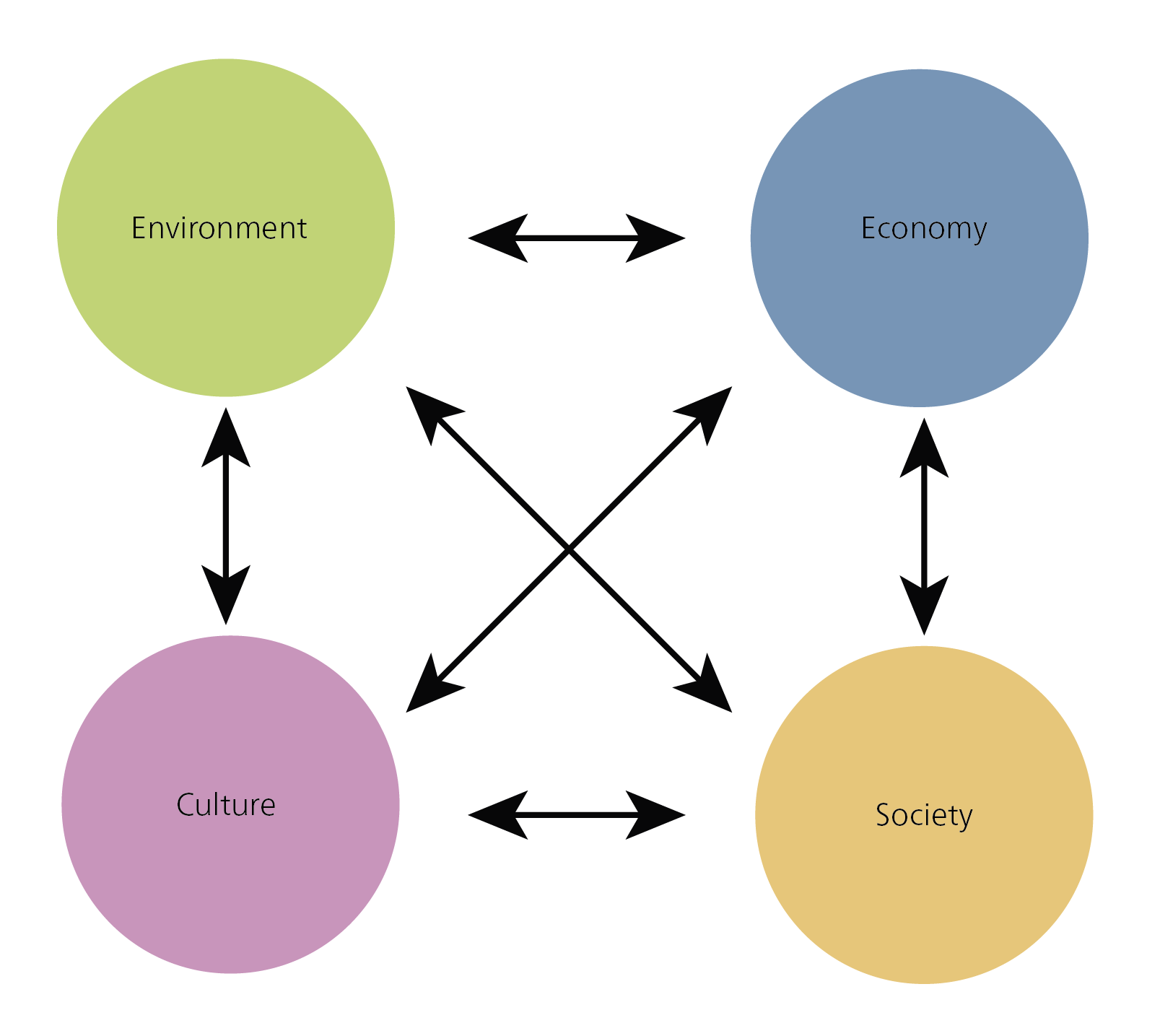
Cultural sustainability is often seen as a part of social sustainability. Sometimes the term “sociocultural sustainability” is also used. In this context, “culture” refers to aspects such as equity, opportunities for participation, awareness of sustainability, and general operating and behavioural models (Murphy 2012). It’s clear that the social and cultural dimensions are closely linked. Cultural processes influence our social lives and how we view social sustainability, like the value we place on equality as a social goal. In turn, social structures and institutions influence cultural practices and judgements. Despite this strong connection, cultural and social sustainability can also be seen as separate dimensions or perspectives of sustainability.
Culture does not have its own Sustainable Development Goal (SDG). In the 2030 Agenda, culture is mentioned in relation to “civilization”, “diversity”, “interculturality”, “cultural heritage”, and “tourism”, under the following four SDGs: quality education (SDG 4), decent work and economic growth (SDG 8), sustainable cities and communities (SDG 11), and responsible consumption and production (SDG 12) (Duxbury et al. 2017).
The concept of cultural sustainability can be interpreted in various ways: as the fourth dimension of sustainability, as culture for sustainability, and as culture as sustainability. The interpretation of “culture as sustainability” requires a new way of thinking and a new paradigm in relation to sustainability. In this view, culture itself is transformed towards sustainability. Cultural sustainability here means thinking about what needs to be preserved, what needs to change, and how we can implement these changes. This interpretation – viewing culture as sustainable development – defines culture in its broadest sense: as a comprehensive way of life and a continuously changing process. Our social order (such as capitalism and democracy), our values, and our ways of working are all cultural products. Culture thus encompasses all the other dimensions of sustainability, and transforming it becomes a key concern for sustainability.
The definition of cultural sustainability contains several important aspects: Firstly, it emphasizes the importance of intellectual growth and responsibility. This means acquiring knowledge, developing a better understanding of important issues, and participating in educational activities and events. It also means acting not only as individuals, but also as members of different communities. All problematic and unsustainable structures and operating models have been created and developed by humans. We humans, therefore, also have the opportunity to change them.
Cultural sustainability is required, for example, for a “Great Transformation” as advocated by Uwe Schneidewind (2018). In his work, Schneidewind emphasizes the need for comprehensive change in all dimensions of society, including culture, in order to achieve sustainable development. Recognizing cultural sustainability as a central paradigm of sustainability supports the vision of a comprehensive transformation that goes beyond technological and economic solutions and strives for a fundamental societal change of course.
1.9 Weak and strong sustainability
The academic debate on sustainability distinguishes between weak and strong sustainability (see e.g. Ott 2020). Neither concept can easily be dismissed, as both rely on assumptions that are difficult to refute. In practice, both concepts are considered partially true, with evidence both in favour and against. The key difference between weak and strong sustainability is the question of what we should sustain, and the degree to which what forms of capital can be substituted. This concerns, in particular, the following three forms of capital: natural capital, manufactured capital, and human capital.
Natural capital: the natural resources and ecosystems that are key to human well-being and sustainable development. These include land, water, air, biodiversity, and renewable energy. Natural capital is the basis for many economic activities, and it provides essential ecosystem services such as food, the purification of water and air, and cultural and aesthetic benefits.
Manufactured capital: the material resources and infrastructure used in production and economic activity. This includes buildings, machinery, technological equipment, means of transport, and physical infrastructure. Manufactured capital is closely linked to economic growth and productivity, and it plays an important role in economic development.
Human capital: the knowledge, skills, level of education, health, and creative abilities of people in a society. It encompasses individual and collective knowledge as well as the skills needed for economic productivity and social progress. Human capital is important for innovation, labour productivity, social participation, and the ability of a society to tackle challenges and to adapt.
1.9.1 Weak sustainability
Weak sustainability can be considered the “soft” or flexible option. Supporters of weak sustainability believe that an action is sustainable if it offers an advantage to the overall system, or at the very least, does not reduce its quality. Weak sustainability can therefore be seen as a basic requirement of sustainability, in that it aims to maintain a certain level of well-being and quality of life while ensuring equity. The concept of weak sustainability “assumes the extensive and, at least in principle, unlimited […] substitutability of all types of capital” (Ott and Döring 2004, 41) and is thus based on the premise of neoclassical economics. Proponents of weak sustainability believe that natural capital can be substituted with other forms of capital. They emphasize the concept of “total capital”, arguing that the specific make-up of the capital inherited by future generations is irrelevant, as long as the overall benefits and well-being are sustained. This aligns with neoclassical utility theory, according to which it is irrelevant how utility is generated.
Weak sustainability supporters therefore believe that measures can be considered sustainable, even if they are carried out at the expense of natural capital – as long as this loss is compensated for by an increase in human or manufactured capital. This could justify the extraction of raw materials such as coal or excessive crude oil. And Carlowitz’s Silvicultura oeconomica forest, could, in principle, also be replaceable or degradable, provided that its natural and cultural functions can be fulfilled in other ways by future generations. This understanding of sustainability emphasizes the importance of technological progress for sustainable development.
Evaluating measures based on weak sustainability is challenging, due to the inherent complexities and numerous assumptions involved. This goes beyond fundamental questions about sustainability, such as “What is a good life?”, or “How do we measure the level of well-being?”. A key challenge lies in assigning a monetary valuation to different types of capital, especially those lacking a clear market price. To operationalize this, what factors should be taken into account? What is the value of natural beauty? What is the value of a rare bird or a whale? Buller’s The Value of a Whale (2022) impressively outlines the problems we face in trying to put a price on elements of nature.
Critics of the concept of weak sustainability point to several limitations. Firstly, they question the assumption that natural resources can be endlessly replaced by reproducible capital. Secondly, they doubt whether an increase in goods can truly compensate for the loss of environmental quality. Finally, concerns exist about our ability to develop new resources and the potential for exceeding critical threshold values. These criticisms have paved the way for the concept of “strong sustainability”.
1.9.2 Strong sustainability
In contrast to weak sustainability, strong sustainability emphasizes the preservation of natural capital. Proponents of this eco-centric theory are less optimistic about our ability to substitute natural resources with manufactured ones, believing these resource types to have limited interchangeability (Daly 1990; Ott 2001; Ott and Döring 2004). They argue that the individual elements of natural capital should be kept as constant as possible, to prevent, for example, species extinction.
| Category | Very Weak Sustainability | Weak Sustainability | Strong Sustainability | Very Strong Sustainability |
|---|---|---|---|---|
| What should be preserved? | Total capital | Essential natural capital | Non-renewable natural capital | Nature has its own value |
| Why? | Maximization of economic profit and individual welfare (GDP) | + Limitation of environmental damage and resource scarcity | Ensuring long-term living conditions for humans and nature | + Respect for all forms of life and duties toward nature |
| How? (Policies) | Growth orientation through promotion of technology and innovation | Environmental regulations, resource efficiency, renewable energies | + Conservation measures, ecological restoration, sustainable agriculture | – |
| Substitutability | In principle unlimited, natural resources can be replaced by technology and trade | Partly possible, but limited substitutability of ecosystem services | Limited, critical threshold for environmental changes | Low, recognition of unique values and relationships |
| Ethics | Anthropocentric, short-term benefits take priority | Anthropocentric with stronger consideration of environmental interests | Pathocentrism, recognition of intrinsic value of nature | Biocentrism, ecological integrity, ethical responsibility toward nature |
While neoclassical economists are confident about substitution, proponents of strong sustainability emphasize the importance of prevention and anticipation, rather than aftercare and reaction. For example, reacting to the hole in the ozone layer by using sun cream, protective clothing, or medical aftercare fails to tackle the cause of the problem. Similarly, technological approaches such as geo-engineering are criticized for merely treating problems superficially. Geo-engineering refers to technical interventions in geochemical or biogeochemical cycles, for example to slow down climate change or ocean acidification.
Until now, reducing pollution has mainly focused on end-of-pipe technologies, such as flue gas cleaning systems on factory chimneys or catalytic converters in cars. But this also meant that we put off tackling long-term environmental problems, such as climate change or biodiversity loss, as long as their effects were not immediately apparent. This phenomenon is linked to the concept of externalization, in which environmental and social costs are shifted outwards, as described by Lessenich (2018). This means that pricing only takes into account the economic costs, partly because they are easier to quantify, while the social and environmental costs of providing goods and services are omitted or externalized, leading to distortions in market prices.
1.10 Sustainability strategies as principles of sustainable development
1.10.1 Efficiency strategy
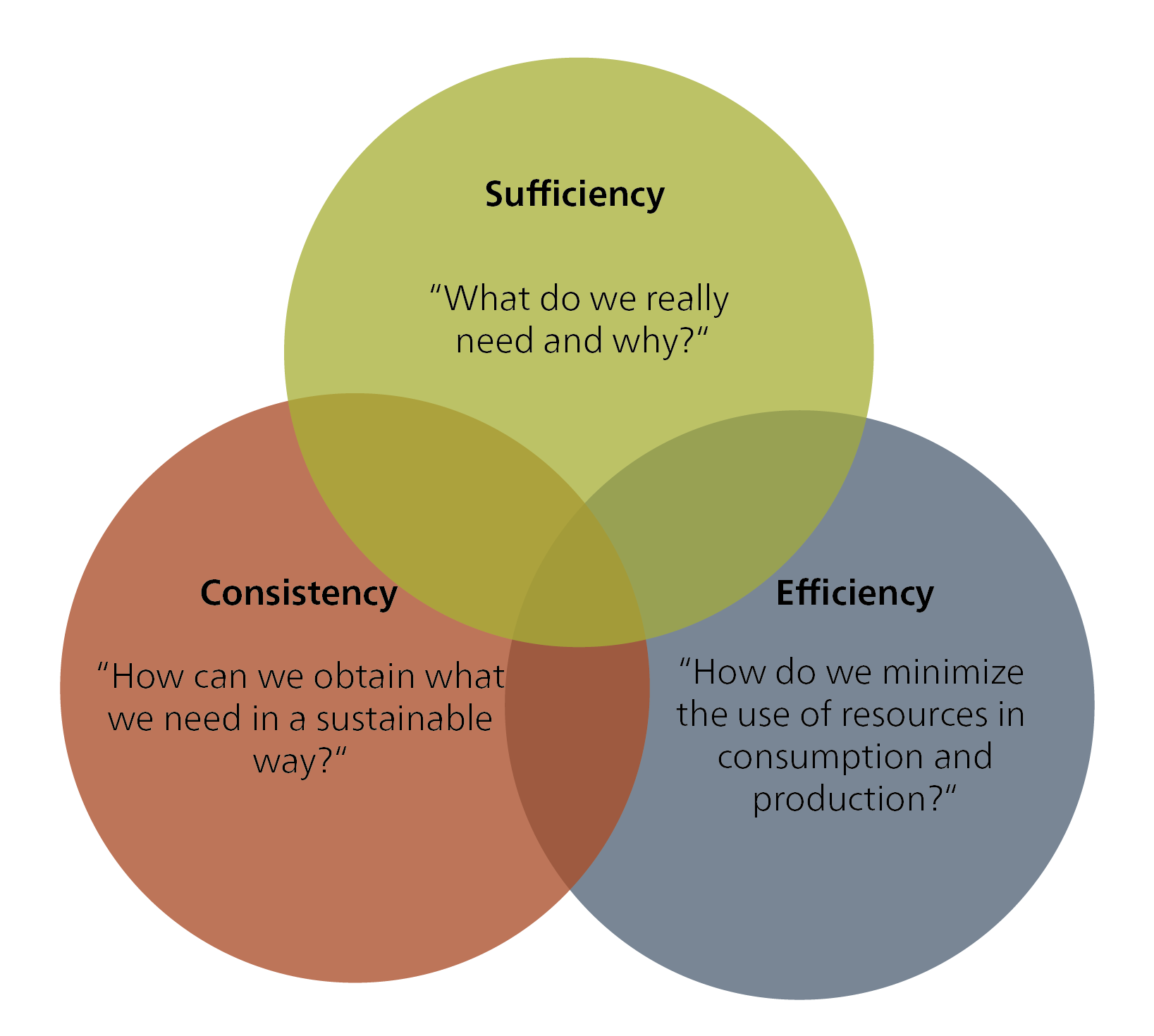
The efficiency strategy focuses on minimizing resource use (i.e. raw materials and energy) in manufacturing or service provision. This translates to reducing material consumption (material intensity), energy consumption (energy intensity), and emissions of harmful substances such as CO2. Also known as “eco-efficiency”, this strategy is attractive to business and society, as it can reduce costs, resource use, and environmental impact. Implementing the efficiency strategy starts with improving production processes, primarily through technological advancements. Proponents believe it’s possible to double prosperity while halving natural resource use (von Weizsäcker et al. 1995). However, critics of the efficiency strategy are less optimistic, and caution against overestimating its impact on sustainable economic activity. They point to “rebound effects”, which can reduce or even wipe out the gains from efficiency increases (Paech 2012; Santarius 2014).
1.10.2 Consistency strategy
While the efficiency strategy focuses on quantity (reducing resource use while achieving greater output), the consistency strategy (from the Latin con = together + sistere = to stop) strives to reconcile nature and technology by using resources repeatedly instead of only once. Instead of fossil fuel-based resources, products, and technologies, it seeks to use materials that are compatible with natural material cycles and processes. Also referred to as “eco-effectiveness”, this concept follows the principle of “cradle to cradle” rather than “cradle to grave”, and is based on the idea that intelligent systems generate only products, not waste. This can be achieved in two ways: Materials can either be biodegradable (e.g. a shampoo made with natural ingredients), or they can be designed with “technical nutrients” that remain in the technical cycle. This means that a disused product doesn’t end up in the rubbish, but instead enters the next cycle of use, for example through upcycling (e.g. reusing a computer casing or converting into, say, a shelving system). Like the efficiency strategy, the consistency strategy also starts by looking at how production processes can be optimized. Many believe that the consistency strategy has greater potential than the efficiency strategy, in terms of problem solving and achieving far-reaching changes.
However, critics believe the theory has limited applicability. For example, Gerolf Hanke and Benjamin Best (2013) argue that it cannot be applied equally to every type of good, and that implementing technologies to achieve it would require significant investment in production facilities and logistics. They also note that recycling processes themselves are associated with increased energy consumption, in accordance with the law of entropy:
“Every material economic process results in an increase in entropy, i.e. roughly simplified, that the elements on the material level are distributed more and more evenly, which ultimately only means that things and bodies wear out and a new concentration requires an ever-increasing amount of energy.” (Translated from Hanke and Best 2013, 11)
A special feature of the Earth’s ecosystem is solar energy, which provides a constant supply of energy from the outside and counteracts the increase in entropy on Earth. But we still need what is known as “grey energy” to manufacture energy generation systems, e.g. biofuel systems, solar cells, electric car batteries, and wind turbines. Consistency strategies can incentivize industry to strive for a reduction in resource consumption and emissions.
1.10.3 Sufficiency strategy
The concept of sufficiency, rooted in the Latin word sufficere (to suffice), challenges our assumptions about how much we need for a good life. It seeks to reduce resource and energy consumption by focusing on reducing the demand for resource-intensive goods and services. Sufficiency, which could also be described as frugality or adequacy, is critical of the constant creation of new needs through technology and advertising, especially given the limited supply of natural resources. Sufficiency urges us not to chase after every newly created need, and to fulfil our needs without consumption. While efficiency and consistency strategies focus on production, sufficiency focuses on consumption, albeit not exclusively: sufficiency can be practised to varying degrees and at different levels, from small changes in behaviour (sharing instead of buying) to significant changes in lifestyle (giving up air travel). Although it starts at an individual level, sufficiency can be applied at various levels, such as by companies (sufficiency-oriented product design) and governments (sufficiency policies). Sufficiency therefore seeks the right balance: How much do we need for a good life? And what do we not need?
Critics believe the sufficiency strategy has only limited potential and is unlikely to find broad sociocultural acceptance. However, proponents see it as crucial for sustainability policy, especially where efficiency and consistency strategies fall short. The concept of a post-growth economy draws on the principles of the sufficiency strategy.
1.10.4 The Rebound Effect: A flipside of efficiency

“Any intelligent fool can make things bigger, more complex, and more violent. It takes a touch of genius – and a lot of courage to move in the opposite direction.” (Schumacher 1973)
Critics of the efficiency principle warn of the rebound effect, also known as the Jevons paradox (Jevons 1865/1965). This phenomenon occurs when efficiency improvements lead to lower prices for goods and services, thus increasing demand and negating the initial benefits of lower resource use.
Take this simple example: If passenger cars become cheaper due to improvements in efficiency, then people may choose a larger model when they next purchase a car. In addition, a fuel-efficient car is cheaper to run, as it requires less fuel per kilometre. This usually incentivizes people to drive more (either by making more frequent journeys or travelling longer distances) and reduce their use of public transport or their bicycle. As a result, efficiency gains that are technically possible are often not realized in practice, as the product in question is used more frequently or more intensively. Apart from the direct change in the use of the product (direct rebound), there may be additional changes in consumer behaviour that affect the environment. In this example, this could mean that the money saved on purchasing or using the car is spent on air travel instead (indirect rebound), which in turn cancels out some of the environmental benefits.
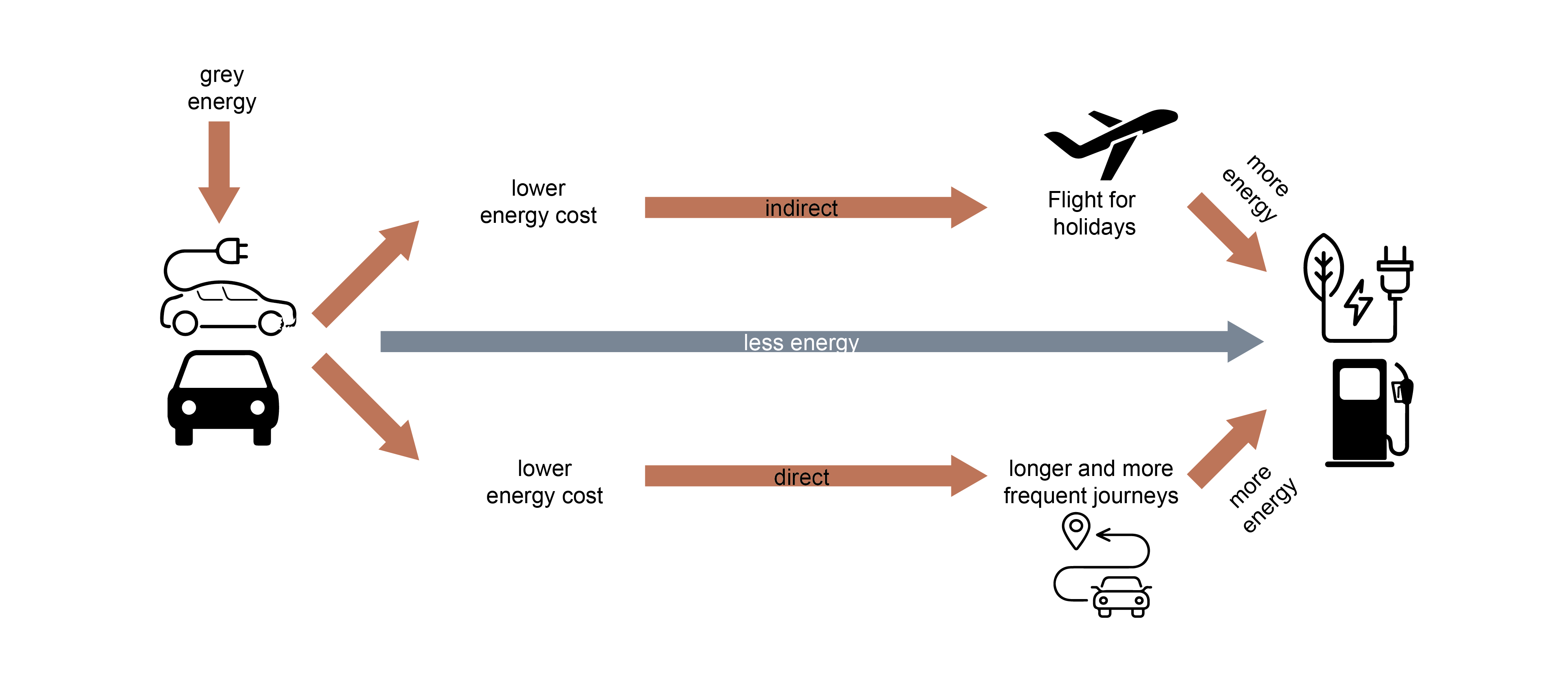
To understand the rebound effect, the literature focuses on the following three areas: 1) financial factors, 2) socio-psychological influences, and 3) regulatory effects, which we analyse in more detail below.
- Financial factors are a major cause of the rebound effect. When efficiency leads to cost savings, financial resources are freed up. This can lead to people either consuming more of the same product (direct rebound effect) or investing in alternative goods (indirect rebound effect). The financial rebound effect can be based on several factors, including:
The income effect: when efficiency leads to real income gains for consumers, it can result in a direct or indirect rebound effect.
The reinvestment effect: when companies use cost savings to expand their production or invest in other products.
The market price effect: the macroeconomic effect in which demand in one sector stimulates demand in other sectors. For example, as cars become more efficient, demand for fuel may fall, making fuel cheaper and affecting demand in other energy-consuming sectors.
The extent and intensity of the financial rebound effect depend on factors such as price elasticity and consumer behaviour. While this happens at the individual level, it can cumulate into a macroeconomic market price effect with far-reaching consequences.
Socio-psychological influences include the “mental accounting” of individual consumers. For example, consumers who have purchased an efficient product may “allow themselves” to consume more. This is why increases in the efficiency of products that were previously considered harmful to the environment can, paradoxically, lead to an increase in consumption. This direct rebound effect is often referred to in social psychology as the “moral hazard effect”. If the decision to increase consumption is not made rationally, this is known as the “moral leaking effect”. For example, if you drive more after buying a resource-efficient car, because the purchase alone is perceived as environmentally conscious. The indirect rebound effect can also be attributed to socio-psychological factors. The “moral licensing effect” states that the purchase of resource-efficient products can lead to an increase in the consumption of other products that may be harmful to the environment. For example, when the purchase of a fuel-efficient car is used to justify more frequent air travel.
Sometimes, government regulations or incentives to promote efficient technologies can have unintended consequences – this is what we mean by the “regulatory effect”. For example, if people are encouraged to purchase large electrical appliances devices due to government incentives for energy-efficient models. Such incentives may result in more frequent purchases of appliances, which – even if the newer model is more efficient than the old – partially cancels out the energy-savings effect. Furthermore, the introduction of efficiency technologies leads to new capacities and infrastructures, which can result in the creation of new markets. Wind turbines, for example, promote the development of new infrastructures and jobs, but at the same time require considerable resources. In addition, consumers who purchase a more efficient product may not necessarily discard their old product. Some end up using both products, representing an increase in overall consumption (Santarius 2014).
1.10.5 How big is the rebound effect?
It is difficult to know exactly how big the rebound effect is: empirical estimates vary widely, depending on the methods used and the effects taken into account. It is particularly challenging to clearly distinguish rebound effects from growth or structural changes. The type of product or service also influences the magnitude of the rebound effect. For example: If a commuter switches to a more efficient car, their costs decrease, but their available time remains fixed. Because a day contains only 24 hours, the commuter cannot increase their commuting time indefinitely. The rebound effect in this scenario is therefore relatively small. The situation is different for leisure activities, such as travelling by air. If costs fall due to more efficient aircraft or cheaper prices, there is a greater incentive to fly more often – for example, taking a second weekend trip instead of just one per year. As time is not such a tight constraint here, additional consumption can increase significantly – as can the rebound effect. Another important component is the degree of saturation with goods and services. Observations show that rebound effects tend to be lower in high-income countries than in developing countries, where there is still a considerable need for additional consumption.
For example, the direct rebound effects associated with improved space heating efficiency can result in energy savings being 10-30% lower than what is technically achievable (e.g. Hediger et al. 2018). The rebound effects of transport vary even more. According to Andersson et al. (2019), the rebound effect related to private mobility might reduce potential savings by 7.5% in Denmark, 30% in Sweden, and 60% in Germany. In contrast, studies on lighting in private households have found very low rebound effects, of less than 10% (Sorrell 2007). Consequently, actual energy savings for these services are, on average, up to 25% lower than what is technically possible and predicted. Ultimately, the magnitude of the rebound depends on the specific context and can be mitigated through targeted policy measures.
This means that the actual energy savings for these services can be, on average, up to 25% less than what is technically possible and predicted. However, the exact magnitude of the rebound depends on the specific context and can be reduced by choosing appropriate measures.
Sometimes, albeit rarely, the savings may be overcompensated. This is known as the “backfire” effect. However, this is an exception, and the “backfire” effect is not a pure rebound effect, as it is linked to the effects of growth and structural change. A good example is digitalization, which can lead to short- and medium-term backfire effects (Peng et al. 2023).
1.11 Sustainability as a scientific discipline
What does “sustainable” mean? We could argue that sustainability means the existence and functioning – for as long as possible – of structures of various degrees of complexity. There are, in fact, many structures in the world that have existed for relatively long periods of time, such as atoms, certain ecosystems, life on Earth as a whole, or planetary systems and galaxies. But why are some structures relatively stable and able to exist “sustainably”, despite being exposed to regular disturbances that jeopardize their existence or function? Are there principles or mechanisms that could explain the continued existence of these diverse systems? And if so – could human societies learn from these principles?
As early as the mid-20th century, scientists began to recognize that fundamental principles connect all aspects of existence, shaping the universe’s order and dynamics. A key figure in this field was Karl Ludwig von Bertalanffy (1901–1972). His research began with his reflections on the “formation of form” in nature (1928), which he further developed in publications on the structure of life (1937), molecules and organisms (1940), and biology (1949). In 1950, he introduced a theory of open systems in physics and biology, a concept that significantly influenced the development of biophysics, fluid equilibrium, and modern developmental theories. His seminal work, General System Theory, was published in 1968.
Systems theory laid the foundation for a revolutionary world view that not only provided explanations for the development and function of so-called systems, but also integrated isolated knowledge from various disciplines. In 1975, in a significant contribution to systems theory, Ervin Laszlo distinguished between seven different system types (physico-chemical and biological systems, organ systems, socio-ecological and socio-cultural systems, and organizational and technical systems). Today, systems theory provides the foundation for modelling complex systems and for cybernetics, which focuses on control and communication mechanisms within systems. The Club of Rome report used systems theory to analyse the growth of processes in the context of positive feedback.
1.11.1 Systemic effects: Escalation and feedback
In systems theory, the mechanisms of positive and negative feedback are used to explain the dynamics and stability of systems. Positive feedback reinforces changes in a system, while negative feedback tends to balance changes, returning the system to a stable state.
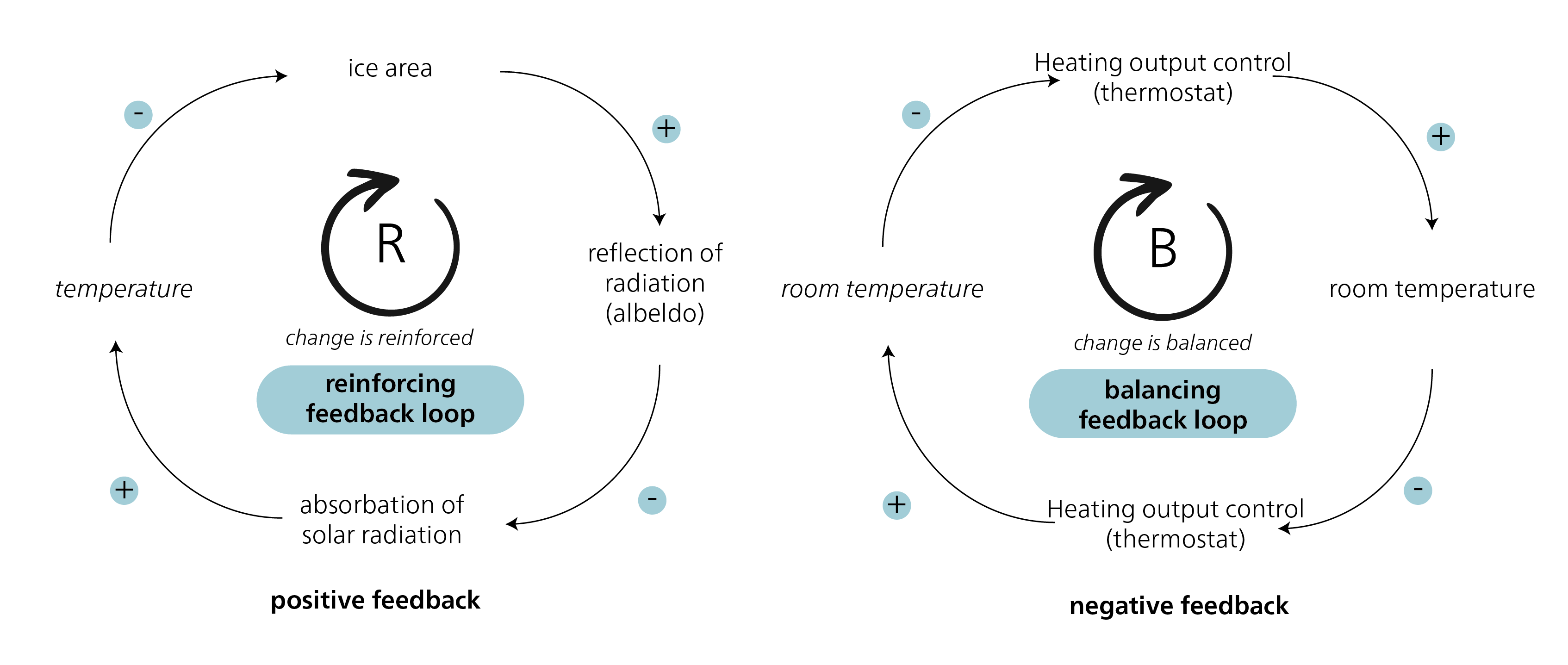
An example of a positive feedback loop is Arctic albedo amplification. Arctic ice reflects a significant portion of solar radiation back into space, limiting heat absorption by the ocean. However, as the ice melts, the darker seawater absorbs more heat, further warming the ocean and causing the remaining ice to melt more rapidly. This process is self-reinforcing, as reduced ice cover lowers the albedo, which in turn leads to greater solar absorption and further melting. This positive feedback has serious consequences for the climate system, as dwindling sea ice contributes to accelerated sea level rise and shifts in oceanic and atmospheric circulation patterns. The extent and speed of this occurrence took scientists by surprise (Stroeve et al. 2007).
An example of negative feedback is a thermostat that regulates the temperature in a room. If the room temperature rises above the set maximum, the thermostat recognizes this and activates the air conditioning to lower the temperature. As soon as the temperature reaches the set value, the thermostat switches off the air conditioning. This control circuit maintains the room temperature at a constant level.
Positive and negative feedback often work together and can cause complex behaviour in systems. Understanding these feedback mechanisms makes it possible to better understand and predict the interactions and behaviour of systems.
1.12 Sustainability science: origins and understanding
An emerging awareness – influenced not least by the publication, The Limits to Growth (Meadows et al. 1972) – led to increased research into global environmental problems. Three major international research programmes are particularly noteworthy here: 1) the International Geosphere-Biosphere Programme (IGBP) from 1987 to 2015; 2) the World Climate Research Programme (WCRP), founded in 1980; and 3) the International Research Programme on Biodiversity (DIVERSITAS), founded in 1991 and renamed in 2014 to Future Earth. Not only did these programmes initiate important basic research – they also provided an important impetus for greater consideration of the results in policy, as reflected, for example, in the UN’s Brundtland Report and Agenda 21. Notably, these research programmes systematically brought together previously separate disciplines of the natural sciences for the first time, although they still largely neglected the interaction between society and the environment. As the interconnectedness of these topics began to gain traction, several research projects promoting their integration were launched, particularly in the US.
“A new field of sustainability science is emerging that seeks to understand the fundamental character of interactions between nature and society. Such an understanding must encompass the interaction of global processes with the ecological and social characteristics of particular places and sectors.” (Kates et al. 2001, 641)
The concept of sustainability science was officially introduced in 2001 at the “Challenges of a Changing Earth” congress in Amsterdam, by the International Council for Science (ICSU), the above-mentioned IGBP, the International Human Dimensions Programme on Global Environmental Change (IHDP), and the above-mentioned WCRP. The German-language term “Nachhaltigkeitswissenschaft” (sustainability science) can be traced back to a translation from English.
1.12.1 Understanding sustainability science
An oft used motto – “society has problems – universities have disciplines” – epitomizes the conventional structure of science into various disciplines. However, disciplinary science appears to be inadequately equipped to meet the challenges of sustainable development. Two main approaches to understanding sustainability science have emerged: on the one hand, it is seen as an independent discipline with its own theories and methods; on the other, as an amalgamation of different disciplines focusing on a common theme (Clark and Dickson 2003). While the first approach is not yet considered accurate, there is broad agreement that sustainability science should be seen as a platform that brings together science, practice, and visions – and incorporates contributions from the entire spectrum of natural, economic, and social sciences (Martens 2006, 38).
Sustainability science is distinct in two key ways. First, unlike traditional (“Mode 1”) research, it isn’t driven by an original scientific programme. Instead, it is guided by the normative concept of sustainability, using this as a framework for scientific analysis. Second, as a distinct type of problem-oriented research, it differs from both basic and applied research. Clark (2007) introduced the term “use-inspired basic research”, which seeks to strike a balance by seeking new knowledge while also considering its potential applications.
| Dimension | Mode-1 science | Mode-2 science |
|---|---|---|
| Orientation | Academic | Academic and social |
| Disciplinarity | Mono-disciplinary | Trans- and interdisciplinary |
| Governance | Technocratic | Participative |
| Knowledge status | Certain | Uncertain |
| Approach | Predictive | Exploratory |
1.12.2 Empirical-analytical vs normative
As sustainable development is a normative model, it is important to distinguish between descriptive (empirical-analytical) research and prescriptive (normative) research. Descriptive statements describe the current state (“is”), while normative statements describe the ideal state (“ought”). In everyday life, the distinction between “is” and “ought” is often not recognized, but it is crucial for science.
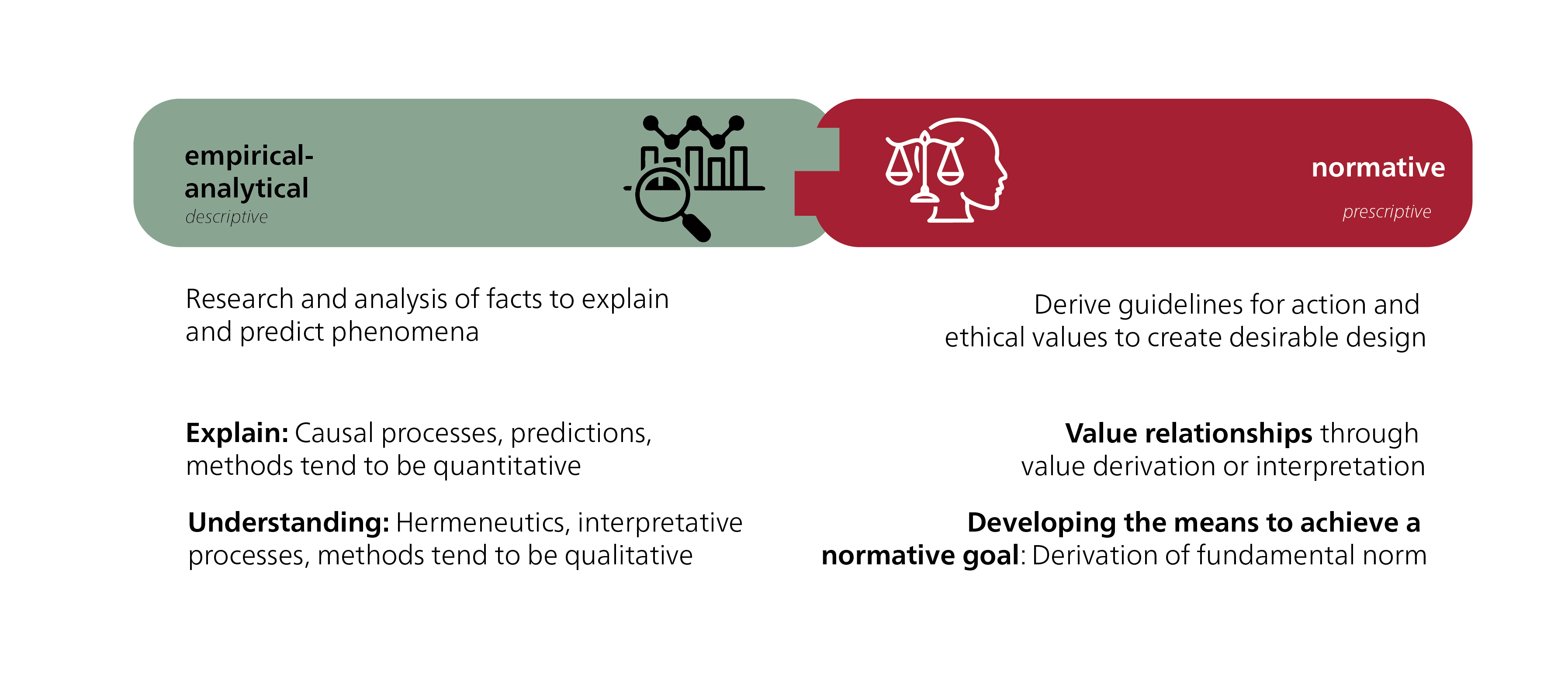
It is important to note that “is” and “ought” statements have different qualities and focus areas, and they cannot simply be linked without further explanation. This understanding forms the basis of Hume’s law, which declares that normative statements about “what ought to be” cannot be derived from descriptive statements about “what is”. To give an extreme example: The fact that around 24,000 people starve to death every day does not allow any conclusions to be drawn as to whether this is good or bad. Without an evaluation, no normative statement can be made about whether this should be prevented. Hume pointed out that many scientists of his time often neglected this crucial distinction, and this is still the case today:
“In every system of morality, which I have hitherto met with, I have always remark’d, that the author proceeds for some time in the ordinary ways of reasoning, and establishes the being of a God, or makes observations concerning human affairs; when of a sudden I am surpriz’d to find, that instead of the usual copulations of propositions, is, and is not, I meet with no proposition that is not connected with an ought, or an ought not. This change is imperceptible; but is however, of the last consequence. For as this ought, or ought not, expresses some new relation or affirmation, ’tis necessary that it shou’d be observ’d and explain’d; and at the same time that a reason should be given; for what seems altogether inconceivable, how this new relation can be a deduction from others, which are entirely different from it… [I] am persuaded, that a small attention wou’d subvert all the vulgar systems of morality, and let us see, that the distinction of vice and virtue is not founded merely on the relations of objects, nor is perceiv’d by reason.” (Hume 1739, bk. 3, Part 1, Section 1)
The realization that is and ought statements differ does not mean that scientists cannot make ought statements. Rather, it means that due to the epistemological differences between the two categories, certain rules must apply when they are linked. Hume tried to establish the relationship between these two statement types through so-called “analytic bridge principles”. Max Weber further formalized these considerations by replacing the bridge principles with the concept of “value relations”. Weber’s call for value freedom (or value neutrality) in empirical science stems from his observation that there is a clear distinction between factual questions (“is”) and value questions (“ought”) (Weber 1999, 245f, 509f). He argued that it is not the task of the empirical sciences to make value judgements. If scientists fail to make an analytical distinction between their personal values and their research goals, this could jeopardize the ability of science to produce verifiable and meaningful results (Weber 1999, 150f). In turn, it could lead to a blurring of the boundaries between scientific knowledge and knowledge from politics, religion, or everyday discussions.
Weber’s call for value freedom in empirical science was often misunderstood (Weber 1999, 499f). It does not mean that research should do without values. (Non-scientific) values have a place in empirical research, particularly in the context of sustainable development, in the following ways:
Values can be an object of inquiry (research object): Values play a key role in the field of environmental and sustainability psychology, for example. In discussions about lifestyles and subjective well-being, researchers study the personal values and beliefs of individuals.
Values influence the choice of research topic: Values influence the selection of research objects and questions (epistemological interest), and thus the direction of research. This is particularly relevant in application-oriented and transdisciplinary research, where the needs and information of relevant social actors are integrated into the research process, for example through joint problem framing or participatory vision development (Schneider et al. 2019).
Value interpretations should be clearly stated: Researchers can create value relationships, or make value interpretations (cf. Weber 1999, 522). A value interpretation, based on the hermeneutic method, concretizes the meaning of overarching value concepts and derives logical values and norms from them. For example, researchers can analyse the SDGs by examining the values underlying sustainable development. Other examples include norms derived from the concept of justice – such as the norm of human responsibility towards our environment, our social environment, and ourselves (see Michelsen and Adomßent 2014, 25; Schneider et al. 2019). It is important to make the original value explicit.
Developing the means to achieve a normative goal: Sustainable development research often relies on value judgements to guide its pursuit of evidence-based solutions. This is comparable to political science, where normative theories aim to construct an ideal – i.e. just – form of government, based on the normative evaluation of what constitutes a just society. Science cannot prove the value of justice, but it can develop strategies and means to achieve this desired goal. This relationship between ends and means represents a logical connection between values and normative statements. The ultimate goal, or end, is determined by extra-scientific values. The researchers have to clearly state this relationship, and formulate their means accordingly. For example, an end–means connection could look like this: “To achieve goal X, Y is the most successful means under conditions b1, b2, and b3”. Sustainable development can be considered as an extra-scientifically given fundamental norm. For example, if research wants to make statements about how sustainable development can be achieved through solar energy, it could proceed as follows: “Switching to solar production could be a promising way of achieving sustainable development. This would organize production and distribution according to the needs of many people, minimize social inequalities, and create conditions for individual well-being.”
1.13 Types of knowledge for sustainable development
Sustainability research focuses on challenges that threaten the long-term safeguarding of social development conditions. In the context of SD as a challenge for society as a whole, the Forum for Climate and Global Change of the Swiss Academy of Sciences has described three different types of knowledge (ProClim 1997): systems, target, and transformation. These three knowledge types take place at three fundamental levels: 1) the analytical level, which aims to generate systems knowledge; 2) the normative level, which develops target and orientation knowledge; and 3) the operational level, which seeks to generate design or transformation knowledge. Figure 1.17 shows the three knowledge types in relation to empirical-analytical and normative research.
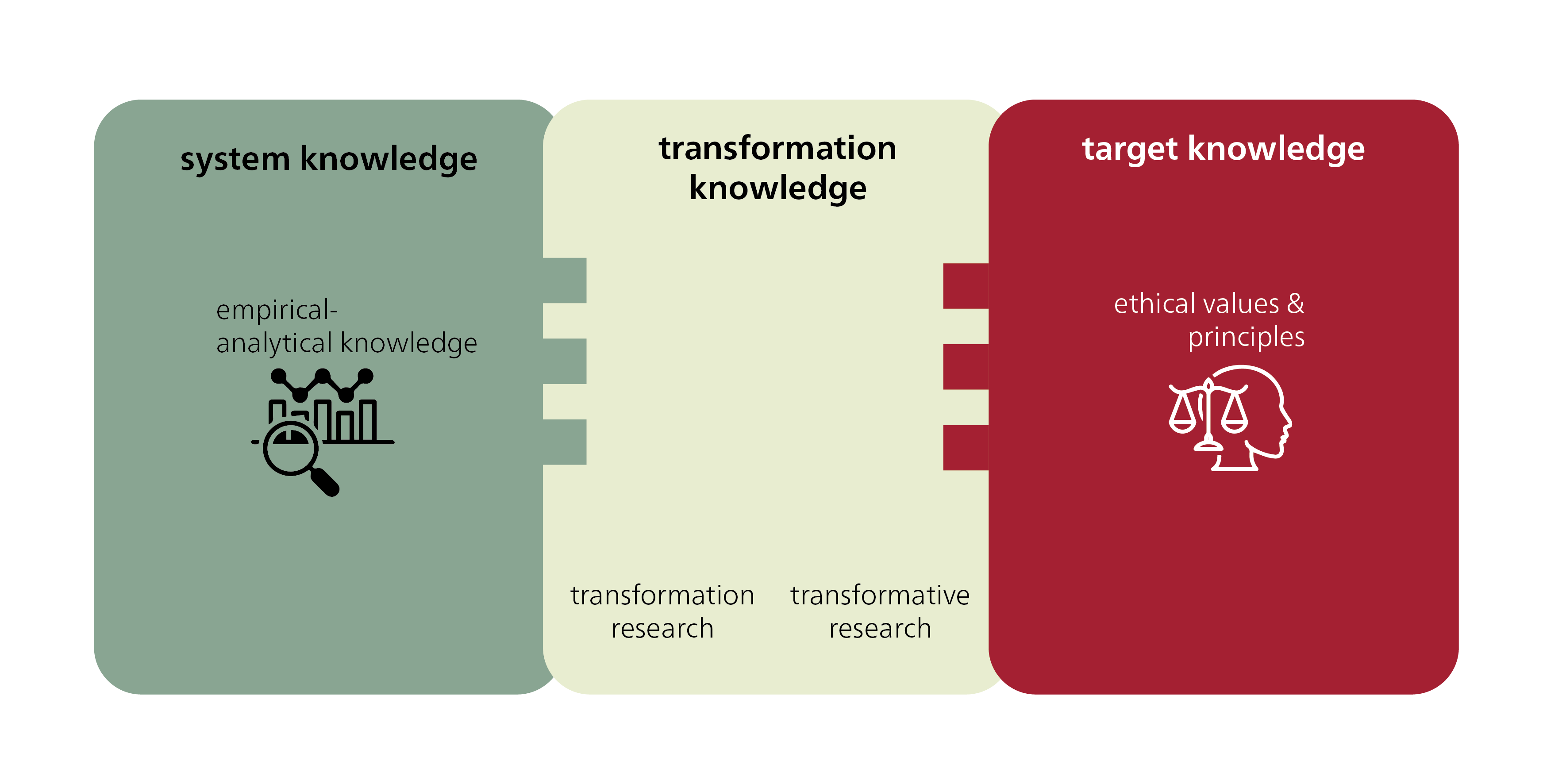
Systems knowledge refers to the understanding of the current state. In relation to sustainable development, research examines relevant structures and processes, describing and explaining their complexity and dynamics. It uses various methods, including qualitative and quantitative approaches, mixed methods, experiments, and systems dynamics approaches. It also uses forecasts, retrospectives, and scenario analyses. Most of the studies that generate systems knowledge fall within the field of empirical research.
Transformation knowledge is the knowledge of how we can get from the current state (“is”) to the desired state (“ought”). This requires an integration of both systems and target knowledge. In other words, research is looking for demonstrably effective solutions to the problems identified in the context of sustainable development. There are many methods to generate transformation knowledge.
Research on transformations, i.e. the change in social organization at various levels, can be empirical as well as normative. Research focusing on past and present transformations is empirical, while research focusing on concrete goals is normative. Accordingly, the German Advisory Council on Global Change (WBGU), distinguishes between “transformation research” and “transformative research”.
Another concept that is emphasized in the context of transformations is “transformative education”, which seeks to promote skills for a comprehensive and multi-layered understanding of change (Schneidewind 2013). As such, transformative education aims to strengthen society’s ability to reflect on issues, for example in terms of observation and in actively shaping transformation processes.
Target knowledge refers to the knowledge of what should be achieved and what should be avoided. Normative research is particularly important in this context. It is about interpreting and operationalizing the values of sustainable development and deriving further standards. Research into the definition of threshold values is just as relevant as methods for assessments and visioning processes (cf. Swart et al. 2004; Wiek and Iwaniec 2014). Target knowledge gives us the answer to the question of what we should transform. CDE’s study programmes are primarily guided by the following concepts of target knowledge for a sustainable economic and social system:
- The principles of sustainable development
- The 2030 Agenda and the SDGs (2015)
- The WBGU’s Flagship Report “World in Transition: A Social Contract for Sustainability” (2011)
- The Global Sustainable Development Report GSDR (2019)
1.14 Sustainability Basics: The Quiz – Chapter 1
Which statement best defines “sustainable development” according to the Brundtland Report?
The Brundtland Report (1987) defines sustainable development as development that meets the needs of the present without compromising the ability of future generations to meet their own needs.
- False
- False
- True
- False
What is normativity?
Normativity refers to values, norms, and morally justified views about what ought to be done and how things should be, rather than describing how things currently are.
- False
- True
- False
What is the “Great Acceleration”?
The “Great Acceleration” refers to the rapid and exponential increase in socioeconomic activities (such as population growth, industrialization, and resource use) and corresponding changes in Earth system processes that began around the mid-20th century.
- False
- False
- True
- False
What distinguishes “strong” from “weak” sustainability?
Strong sustainability assumes that certain ecological functions and natural capital stocks are critical and cannot be substituted by human-made or technological capital, whereas weak sustainability allows for substitution.
- False
- False
- True
- False
Which statements correctly describe the difference between strong and weak sustainability? (More than one statement may be correct.)
Weak sustainability is based on the assumption that different forms of capital (natural, human-made, social) can substitute each other and that technological progress can compensate for the loss of natural capital. Strong sustainability, in contrast, holds that natural capital is essential and cannot be substituted without risking irreversible damage.
- False
- True
- True
- True
Which of the following statements describe weak sustainability? (More than one statement may be correct.)
Weak sustainability focuses on maintaining the overall stock of capital across generations, assuming that different forms of capital can substitute for one another. Natural capital is preserved primarily insofar as it contributes to human well-being, rather than being considered intrinsically irreplaceable.
- True
- False
- False
- False
- False
- True
- False
- True
Which of the following statements describe strong sustainability? (More than one statement may be correct.)
Strong sustainability emphasizes the essential and non-substitutable role of natural capital for human survival and well-being. It requires the preservation of critical natural capital across generations and recognizes that nature provides indispensable contributions to human well-being that cannot be fully replaced by human-made capital or technological innovation.
- False
- False
- True
- False
- True
- True
What is the primary goal of the consistency strategy in sustainability?
The consistency strategy aims to align economic activities and consumption patterns with natural systems by designing products, processes, and services in ways that are environmentally sustainable while still meeting human needs.
- False
- False
- True
- False
Which of the following statements about sustainability strategies are correct? (More than one statement may be correct.)
Efficiency focuses on reducing resource use per unit of output. Consistency aims at aligning production with natural cycles, for example through closed-loop or infinitely recyclable systems. Sufficiency questions levels of production and consumption, and the three strategies therefore differ in how they affect consumption.
- False
- False
- True
- True